What is a Cleaver Knife Used For? Ultimate Kitchen Guide
· By Rehman bsoursce
Ultimate Guide: What You Need to Know
A cleaver knife is a large, rectangular-bladed knife primarily used for heavy-duty butchery and versatile food preparation. Unlike precision knives, a cleaver relies on its weight and momentum to hack through bone, cartilage, and thick vegetables.
Key Takeaways
-
Versatility: Cleaver knives are essential for both professional chefs and home cooks.
-
Types Matter: Meat cleavers handle bones; vegetable (Chinese) cleavers are for precision slicing.
-
Safety First: Proper grip and stable surfaces are non-negotiable for safe use.
-
Low Maintenance, High Reward: Regular honing and hand-washing preserve the heavy-duty edge.
Understanding the Cleaver Knife: An Essential Kitchen Tool

In the bustling environment of a kitchen, a cleaver knife stands out as a powerhouse. Its wide blade and sturdy design make it a favorite for those seeking efficiency.
Why use a cleaver?
The wide blade allows you to chop, slice, and scoop ingredients with ease. This versatility means you can transition between tasks like smashing garlic and then hacking through a chicken carcass without switching tools. For professional chefs, it reduces clutter; for home cooks, it simplifies meal prep.
The History and Evolution of Cleavers
The history of cleaver knives is a blend of ancient practices and modern innovation. Dating back centuries, these tools were originally designed for basic butchery.

-
Ancient Origins: Early versions were rugged tools for breaking down large game.
-
Regional Evolution: The Chinese Cleaver (Cai Dao) evolved into a "do-it-all" tool, while Western designs remained focused on heavy bone-breaking.
-
Modern Innovation: Today’s cleavers use high-carbon stainless steel and ergonomic handles, marrying traditional weight with contemporary comfort.
Different Types of Cleaver Knives and Their Uses
There is no "one-size-fits-all" cleaver. Choosing the right type is the difference between a clean cut and a ruined blade.
|
Type |
Primary Use |
Blade Characteristics |
|
Meat Cleaver |
Breaking bones, butchery |
Thick, heavy, durable edge |
|
Vegetable Cleaver |
Slicing, dicing, mincing |
Thin, razor-sharp, lightweight |
|
Chinese Cleaver |
General multipurpose prep |
Medium thickness, wide surface |
|
Santoku Cleaver |
Precision slicing & scooping |
Hybrid design with a flatter edge |
The Chinese Cleaver: Versatility in the Kitchen
The Chinese cleaver is the ultimate multitasker. Despite its appearance, it is often light enough for delicate work.
-
Ingredient Transfer: Use the broad blade as a "bench scraper" to scoop up chopped onions or herbs.
-
Crushing: The flat side is perfect for bruising lemongrass or smashing ginger.
-
Tenderizing: The blunt spine can be used to tenderize meat without cutting through it.
Meat Cleavers vs. Other Knives: What Sets Them Apart?

A meat cleaver is defined by its durability. While a Chef’s knife might chip if it hits a bone, a meat cleaver is designed for impact. Its "wedge" shape helps split materials apart rather than just slicing through them. This specialized function makes it indispensable for anyone who buys whole poultry or large cuts of meat.
Choosing the Right Cleaver for Your Kitchen
Before buying, consider these three pillars:
-
Blade Material: High-carbon steel holds an edge longer but requires more care. Stainless steel is rust-resistant and easier for beginners.
-
Handle Design: Look for a full tang (where the steel runs through the handle) for maximum stability.
-
Weight: A meat cleaver should feel heavy enough to do the work for you, but a vegetable cleaver should feel like an extension of your hand.
Proper Techniques for Using a Cleaver Knife Safely
To avoid injury, follow these professional techniques:
-
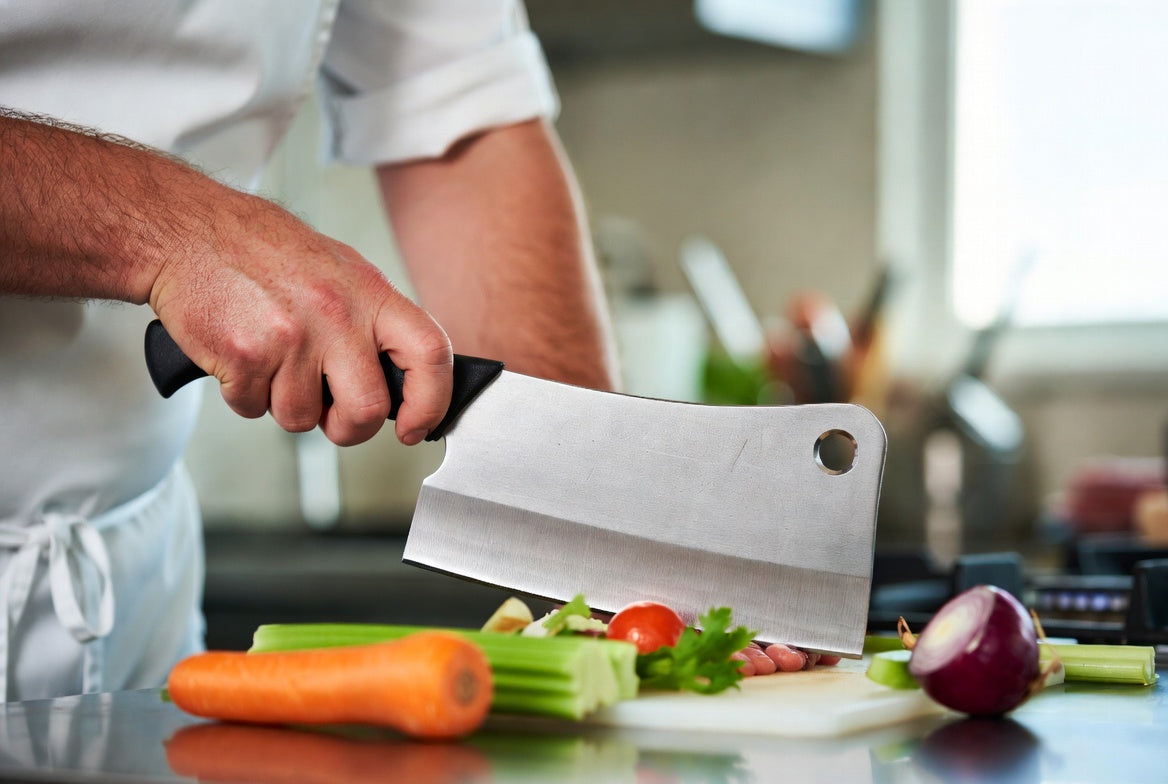
The Grip: Hold the handle firmly, but pinch the base of the blade with your thumb and index finger for better control.
-
The "Claw" Technique: Always tuck your fingertips inward on the hand holding the food to prevent the blade from making contact with your skin.
-
Stable Surface: Only use a heavy wood or plastic cutting board. Never use glass or stone, which can cause the blade to slip.
Maintaining and Sharpening Your Cleaver Knives

-
Hand Wash Only: Dishwashers dull the edge and can crack wooden handles.
-
Sharpening Angle: Meat cleavers require a steeper angle (approx. 25 degrees) to withstand bone impact.
-
Honing: Use a honing rod before every use to realign the microscopic teeth on the blade’s edge.
Common Mistakes to Avoid
-
Using Force, Not Weight: Don't "saw" with a cleaver. Use a confident, vertical chop.
-
Cutting on Hard Surfaces: Avoid ceramic or marble, which will ruin the edge instantly.
-
Misidentifying Your Tool: Never use a thin Chinese vegetable cleaver to cut through bone; it will chip the blade.

Creative Ways to Use a Cleaver Knife in Cooking
Beyond basic chopping, try these:
-
Garlic Smash: One swift hit with the flat side removes peels instantly.
-
Nut Cracking: Use the flat surface to crush walnuts or peppercorns.
-
Plating: Use the wide surface to press down on a stack of sliced vegetables to keep them neat when moving to the plate.
Frequently Asked Questions (FAQ)
What is a cleaver knife used for?
It is used for chopping bones, slicing meat, dicing vegetables, and crushing aromatics like garlic.
Can I use a cleaver for everyday cooking?
Yes, especially a Chinese Cleaver, which functions as a versatile chef's knife.
How often should I sharpen it?
For home use, a full sharpening every 3–6 months is standard, with honing every few uses.
Conclusion
Cleaver knives are gateways to efficiency. Whether you are breaking down a chicken with a heavy meat cleaver or dicing herbs with a Chinese vegetable cleaver, these tools empower your cooking. Start with a high-quality stainless steel model and practice your grip—you'll soon wonder how you ever cooked without one.