Fillet Knives
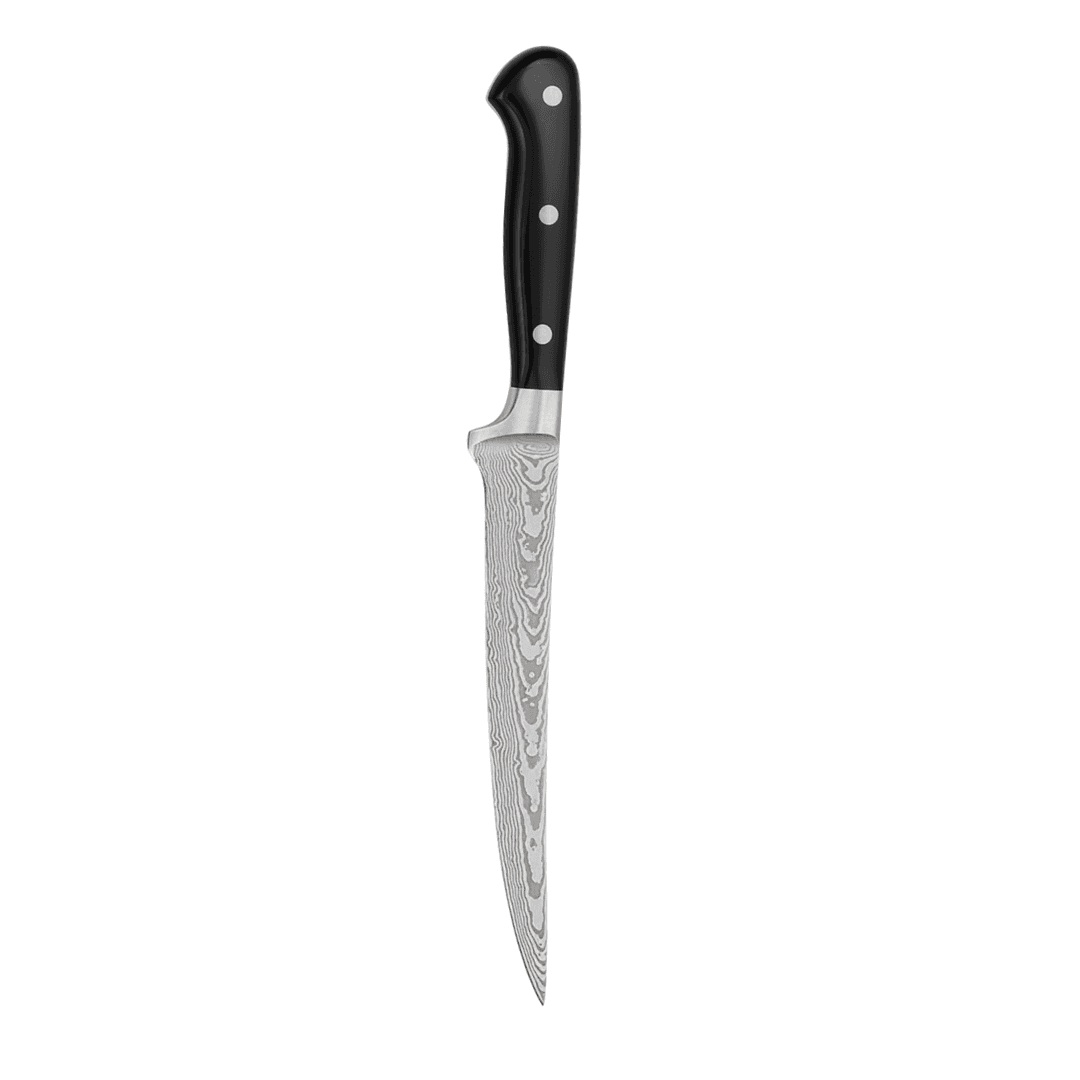
Handmade fillet knives built for clean, precise cuts on fish and fine meats. Each blade is thin and flexible enough to follow bones and joints closely, available in Damascus or stainless steel, in 8-inch and 12-inch lengths to match the size of fish you're working with.
What Makes a Good Fillet Knife
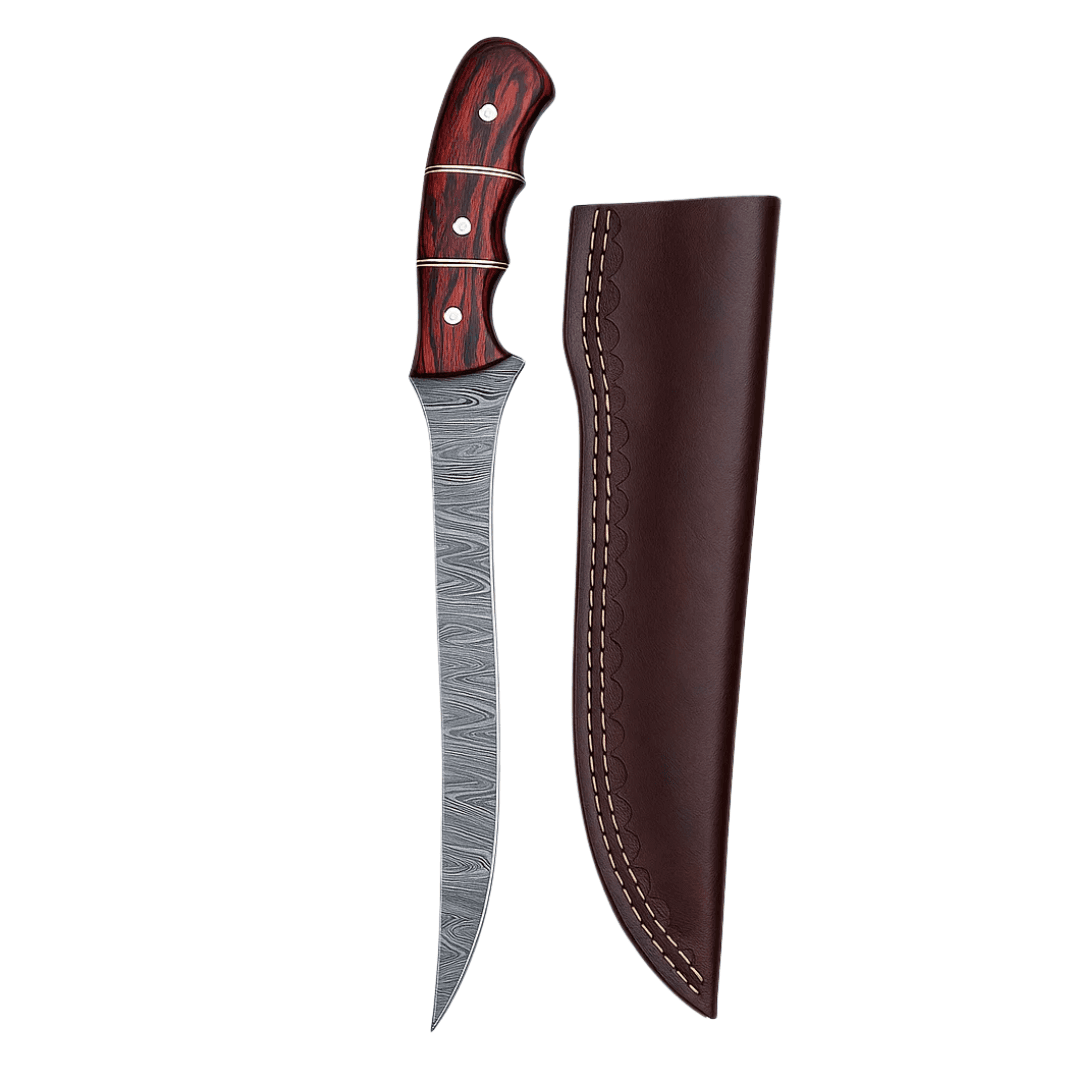
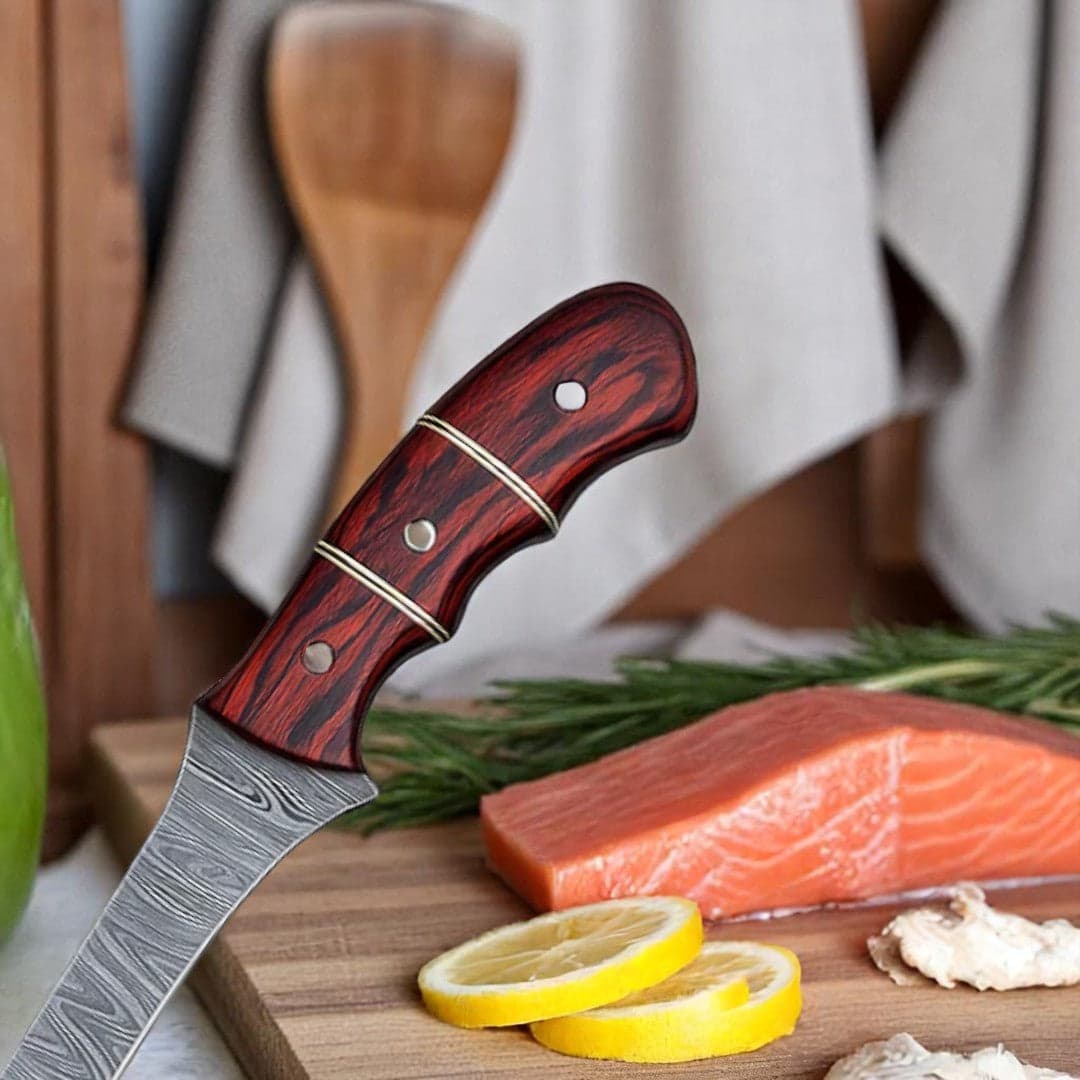
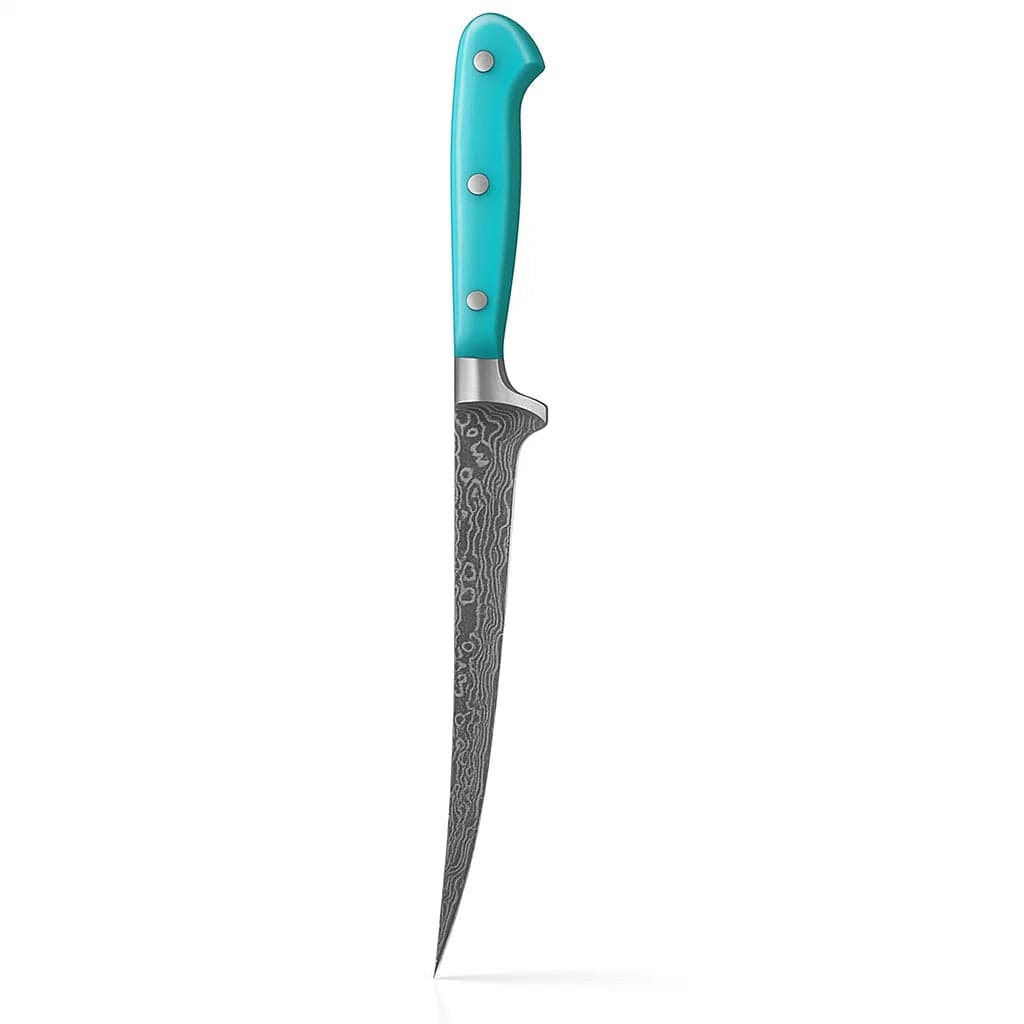
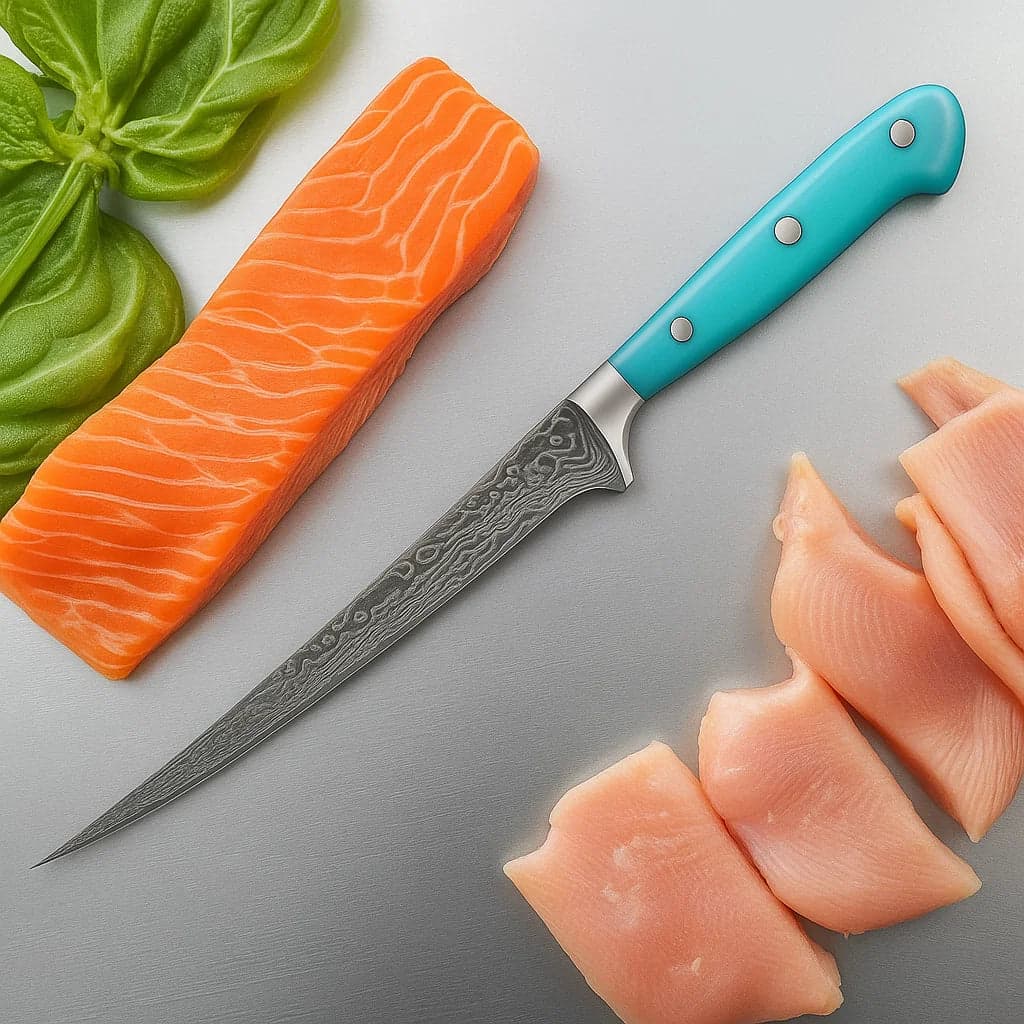
A fillet knife needs a thin, flexible blade that flexes slightly as it follows a fish's bones and joints, unlike a stiff chef knife built for chopping. Our Elegant Damascus Fillet Knife with Wood Handle is built specifically for that kind of controlled, close-following cut, whether you're working on fish, poultry, or fine boning.
Choosing the Best Fillet Knife for Fish
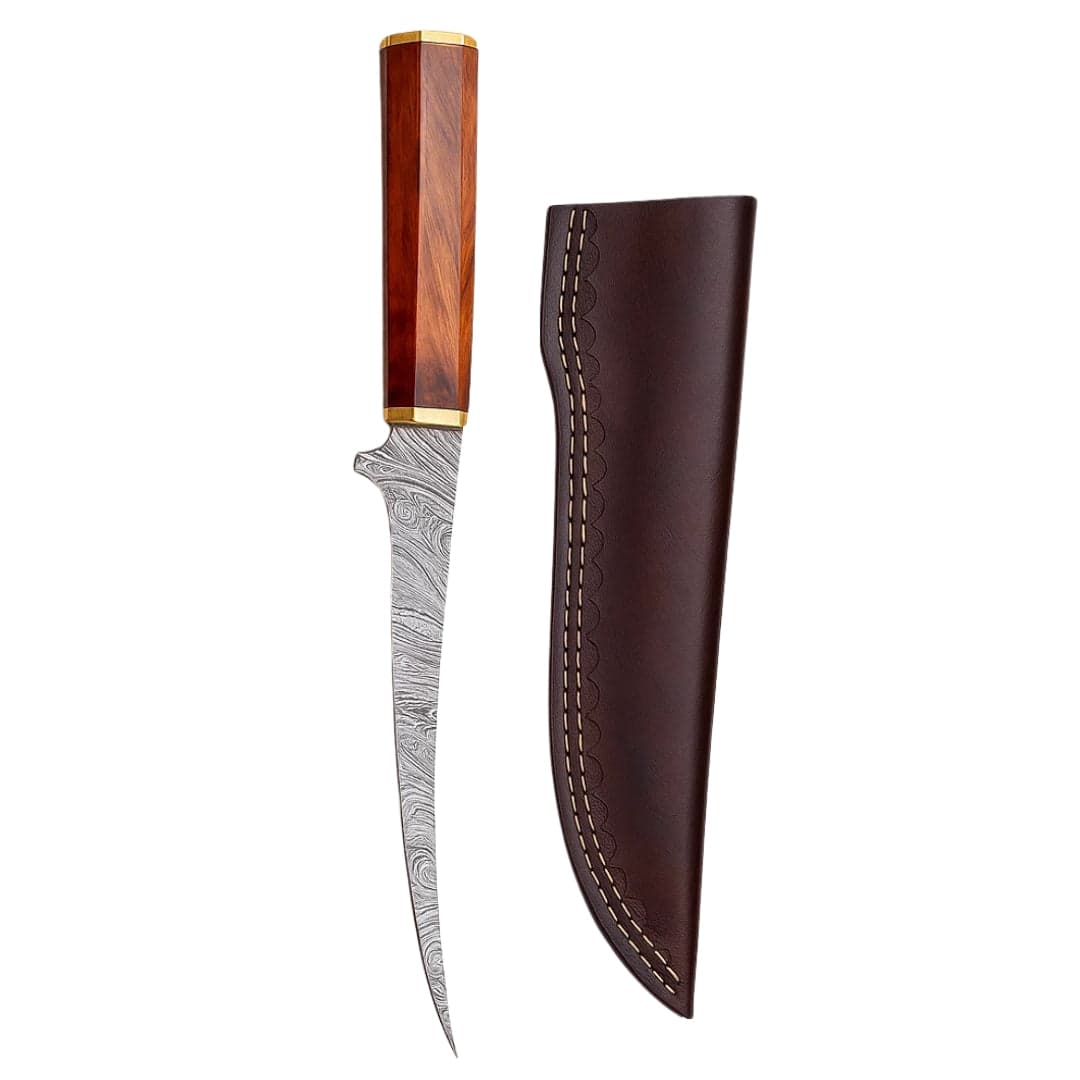
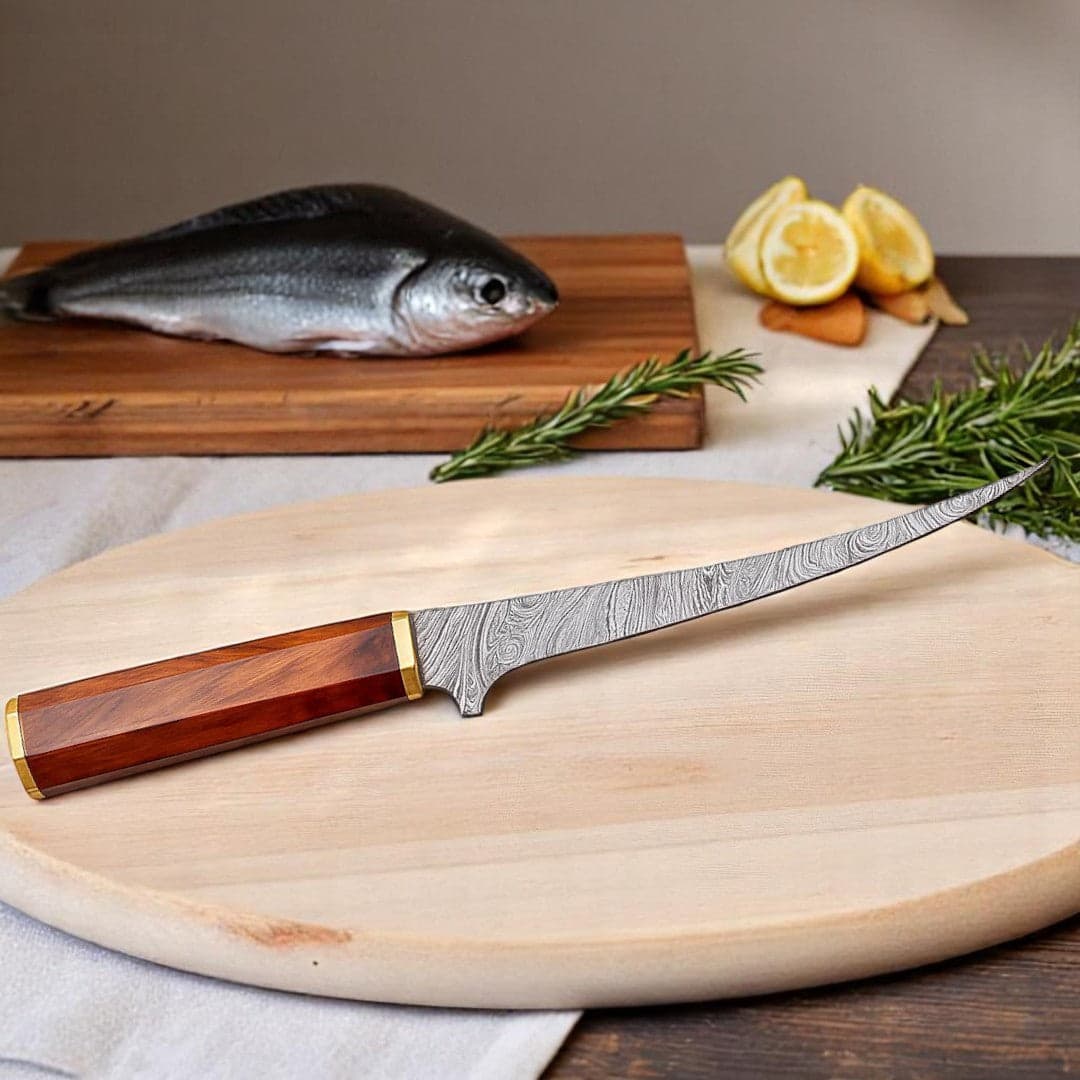
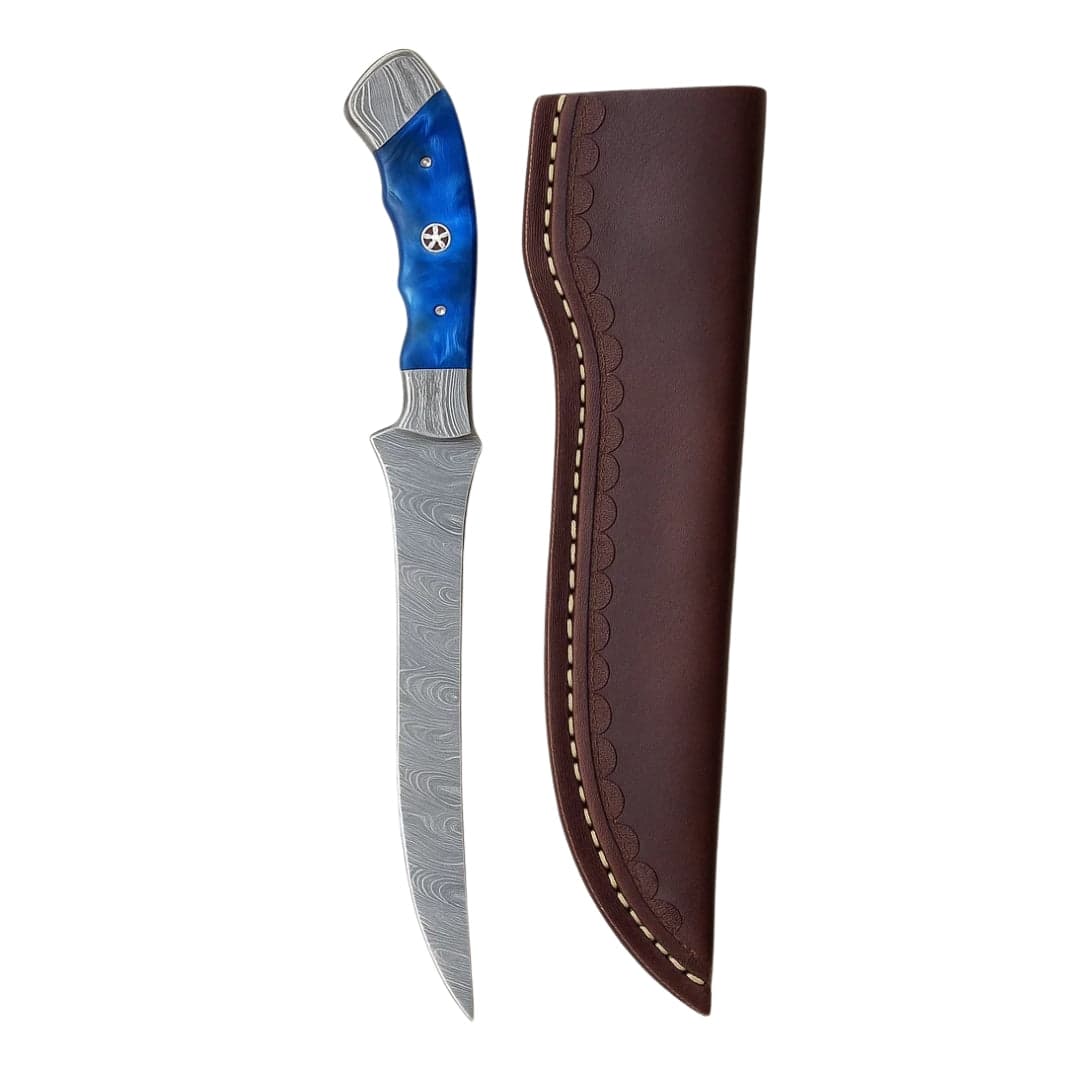
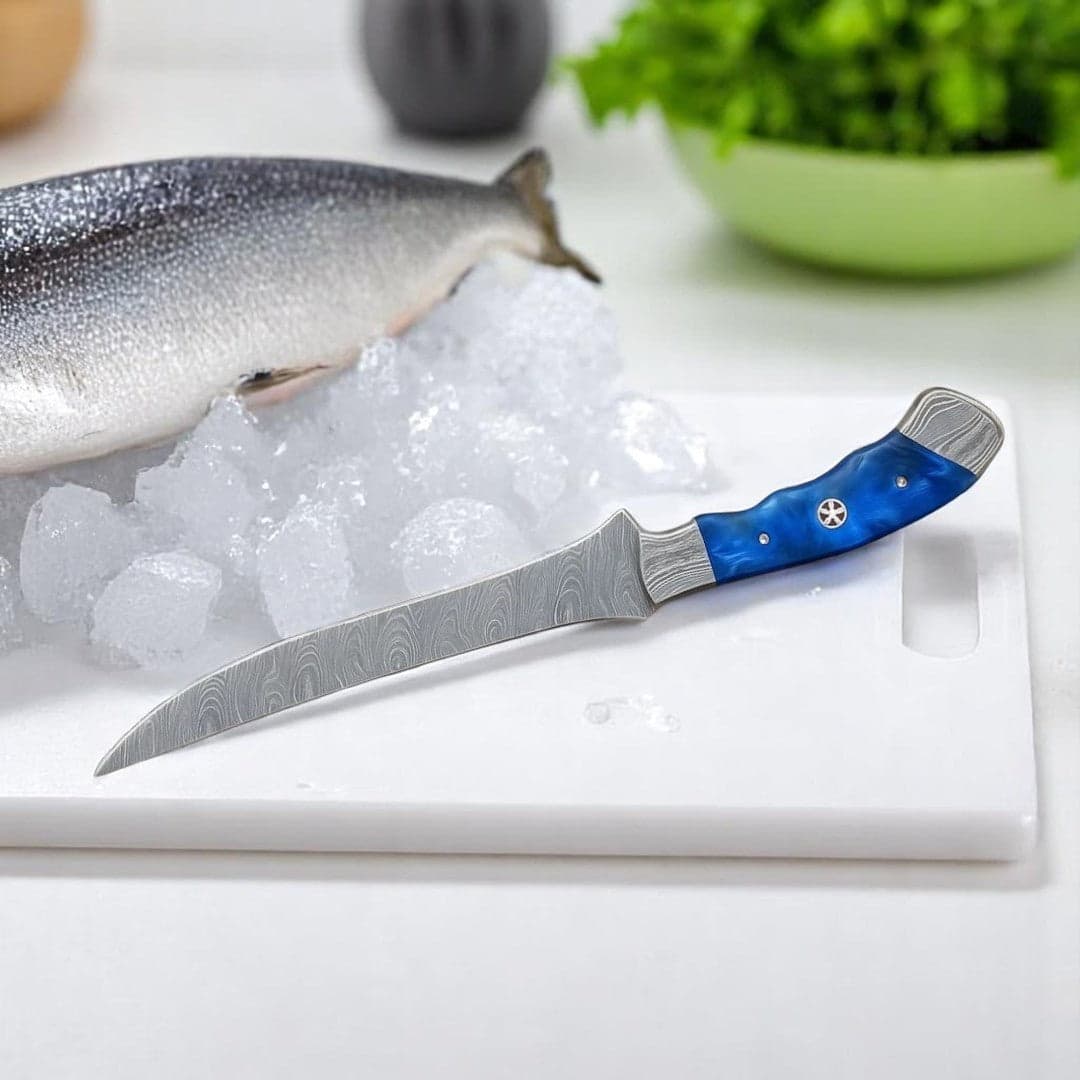
Blade length depends on what you're cutting. For most fish, our Damascus Fillet Knife with Blue Resin (8-inch) offers a good balance of flexibility and control. For larger fish, longer options like the 12" Damascus Steel Fillet Knife for Fish and Boning give more reach in a single pass. A curved blade tip, found on several knives in this collection, makes it easier to separate meat from bones around fins and ribcages.
Damascus vs. Stainless for Saltwater Fish
If you're filleting saltwater fish regularly, steel choice matters. Our Damascus fillet knives use high-carbon steel for sharpness and edge retention, but like any carbon steel, they need to be rinsed and dried right after contact with saltwater to avoid rust. If low maintenance around saltwater is your priority, a stainless steel fillet knife holds up with less aftercare, though it won't carry the same forged pattern.
Caring for Your Fillet Knife
Rinse and dry your blade immediately after use, especially after saltwater or fish contact, and apply a light coat of oil to carbon steel blades between uses. Our knife accessories carry sharpening stones and blade oil sized for a thin fillet blade. If you also need a knife for larger cuts of meat rather than fish, our Damascus Chef Knives cover that use case instead.
FREQUENTLY ASKED QUESTIONS
What type of knife is best for filleting fish?
A flexible, thin-bladed fillet knife between 6 and 9 inches is ideal for filleting fish. Narrow blades follow the bones closely and create clean cuts through the flesh, with a 7.5 to 8-inch blade offering good versatility for most fish.
What is the best fillet knife for saltwater fish?
A stainless steel fillet knife generally requires less maintenance for regular saltwater use, since it resists corrosion better than high-carbon steel. A Damascus fillet knife can still handle saltwater fish well, as long as it's rinsed and dried promptly after each use.
Is a straight or curved fillet knife better?
A curved blade is generally better for filleting fish, since it allows smoother, more controlled cuts along the natural contours of the fish, especially around fins and ribcages.
What makes a fillet knife flexible?
A fillet knife's flexibility comes from a thin blade profile, which lets it bend slightly to follow bones and joints closely instead of cutting straight through them, minimizing waste.
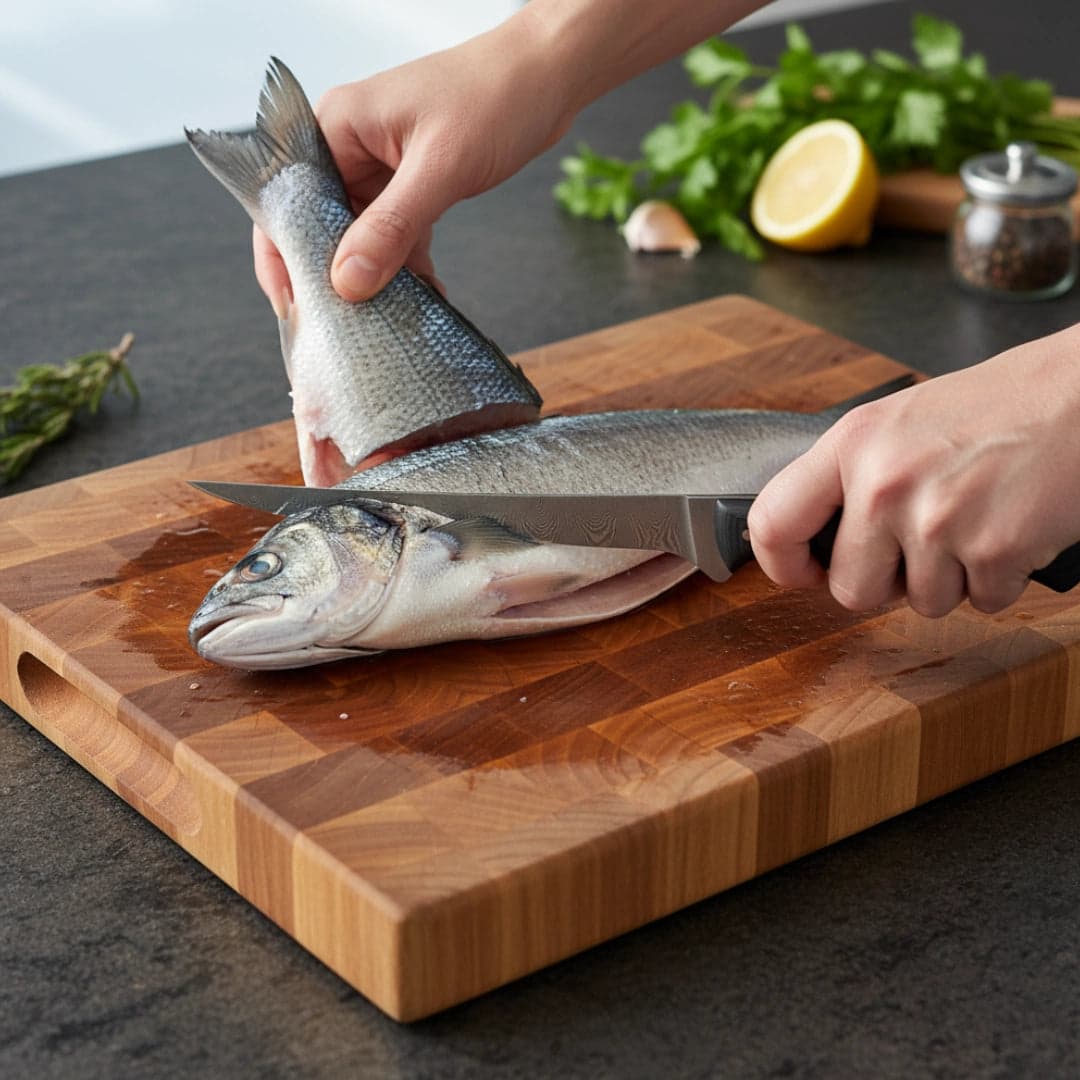
What is the most effective method for cutting fish?
Start by scaling the fish, then make an initial cut behind the gills. Use the fillet knife to separate the fillet from the backbone, working from head to tail, then hold the fillet by the tail to separate the skin from the flesh.