Santoku Knives
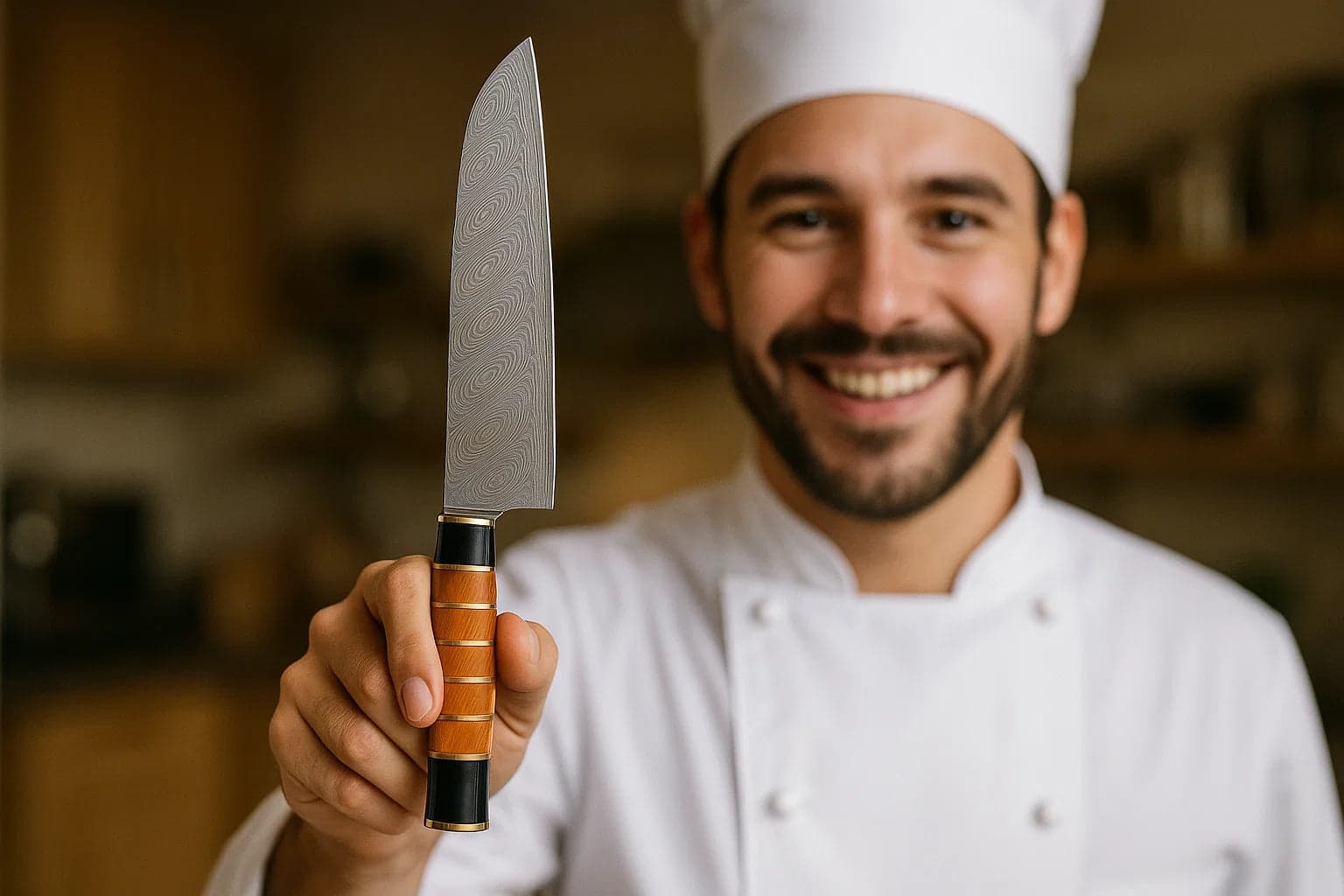
Master mincing, dicing, and slicing with our Santoku knives — hand-forged in traditional Japanese steel and layered Damascus steel.
Santoku Knives in Japanese Steel and Damascus Steel
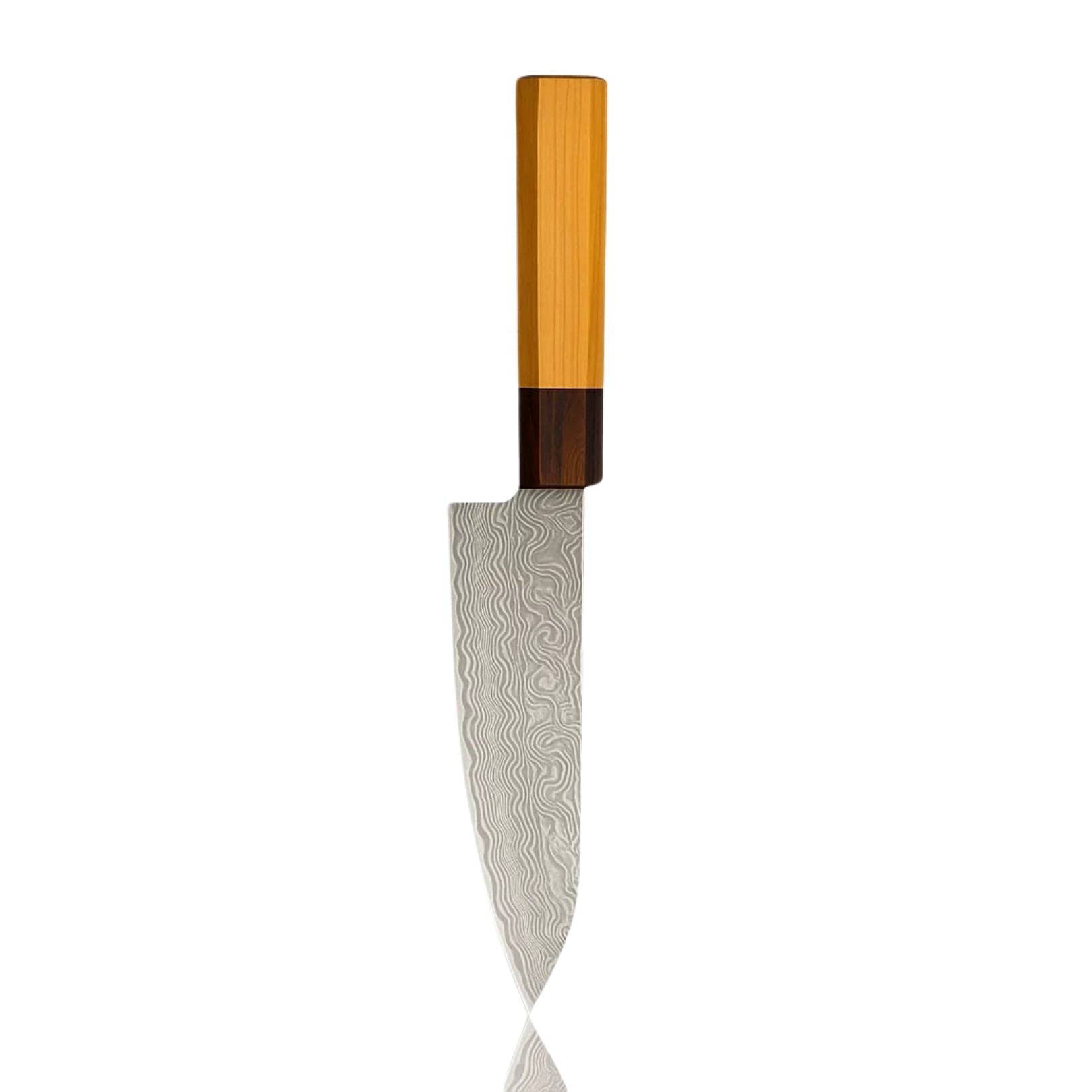
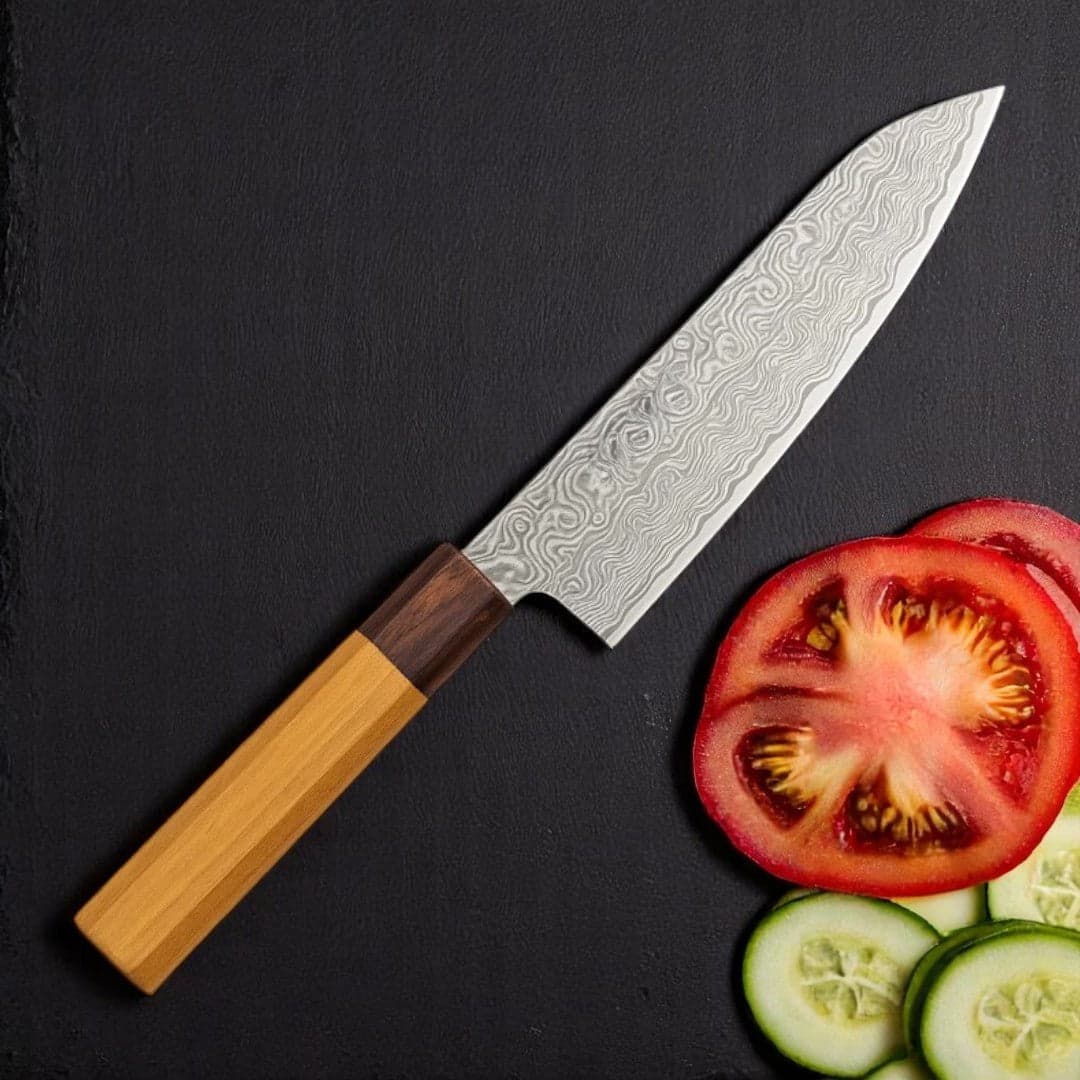
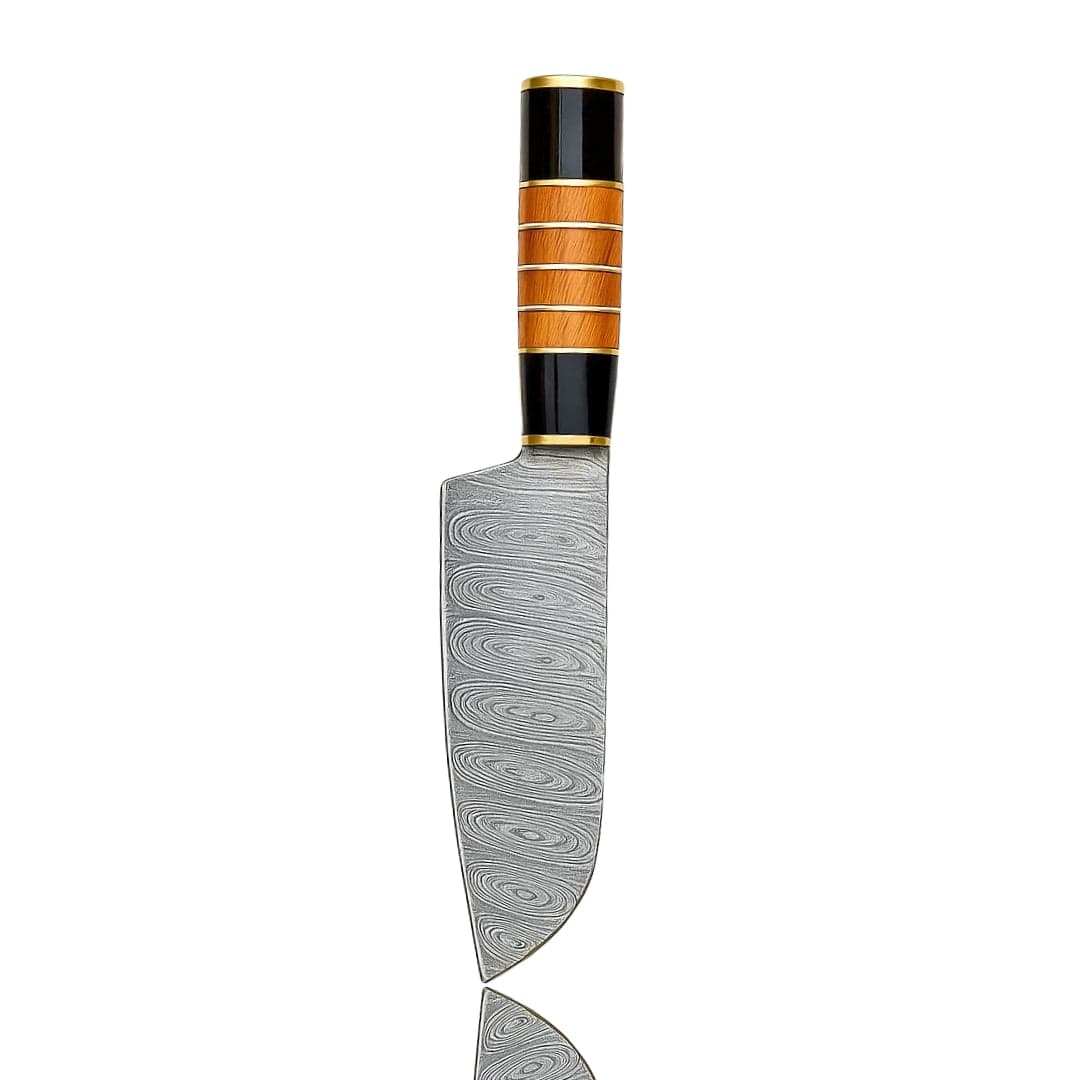
The santoku knife is a Japanese kitchen knife built for three tasks: cutting meat, fish, and vegetables. In fact, "santoku" translates to "three virtues" — a reference to the knife's ability to handle all three with equal precision. This collection isn't limited to one style of blade: you'll find traditional Japanese santoku knives forged from steels like VG-10, alongside santoku damascus knife options with hand-forged, layered Damascus steel. Both share the same sheep's-foot blade shape and push-cutting geometry that made the santoku a kitchen standard — the difference comes down to the steel and the look.
What Makes a Santoku Blade Different
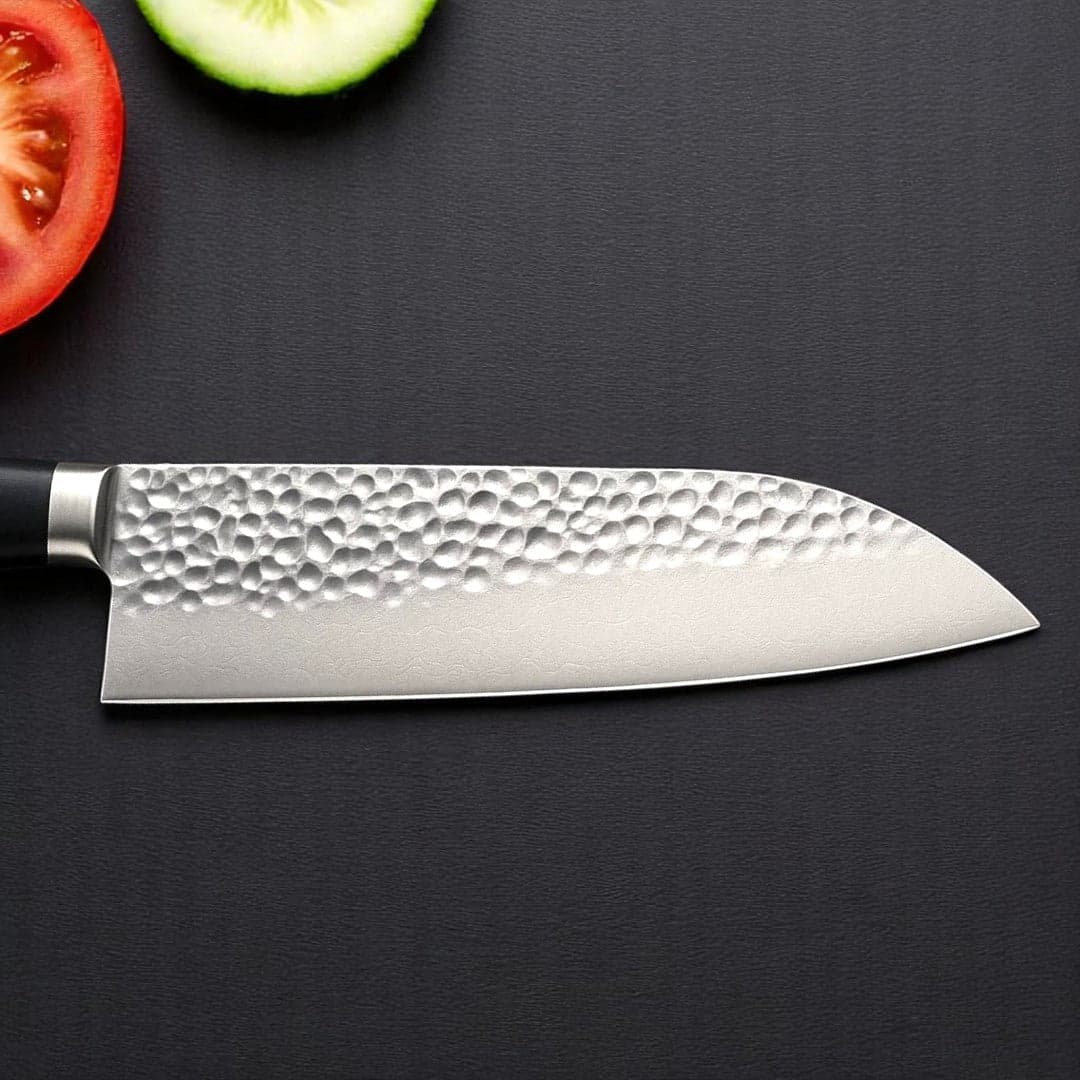
A santoku blade is shorter and flatter than a traditional Western chef's knife, typically running 5 to 7 inches. The edge stays flat along most of its length before curving gently at the tip, which is what gives the santoku its signature sheep's-foot profile. That geometry is built for a push-cutting motion — straight down through the ingredient — rather than the rocking motion a chef's knife uses. If you're deciding between the two, our Damascus chef knives collection is worth a look for anyone who prefers a longer, curved blade for rock-chopping.
Japanese Steel vs. Damascus Steel Santoku Knives
Both steel types in this collection are built for serious daily use, but they suit slightly different priorities:
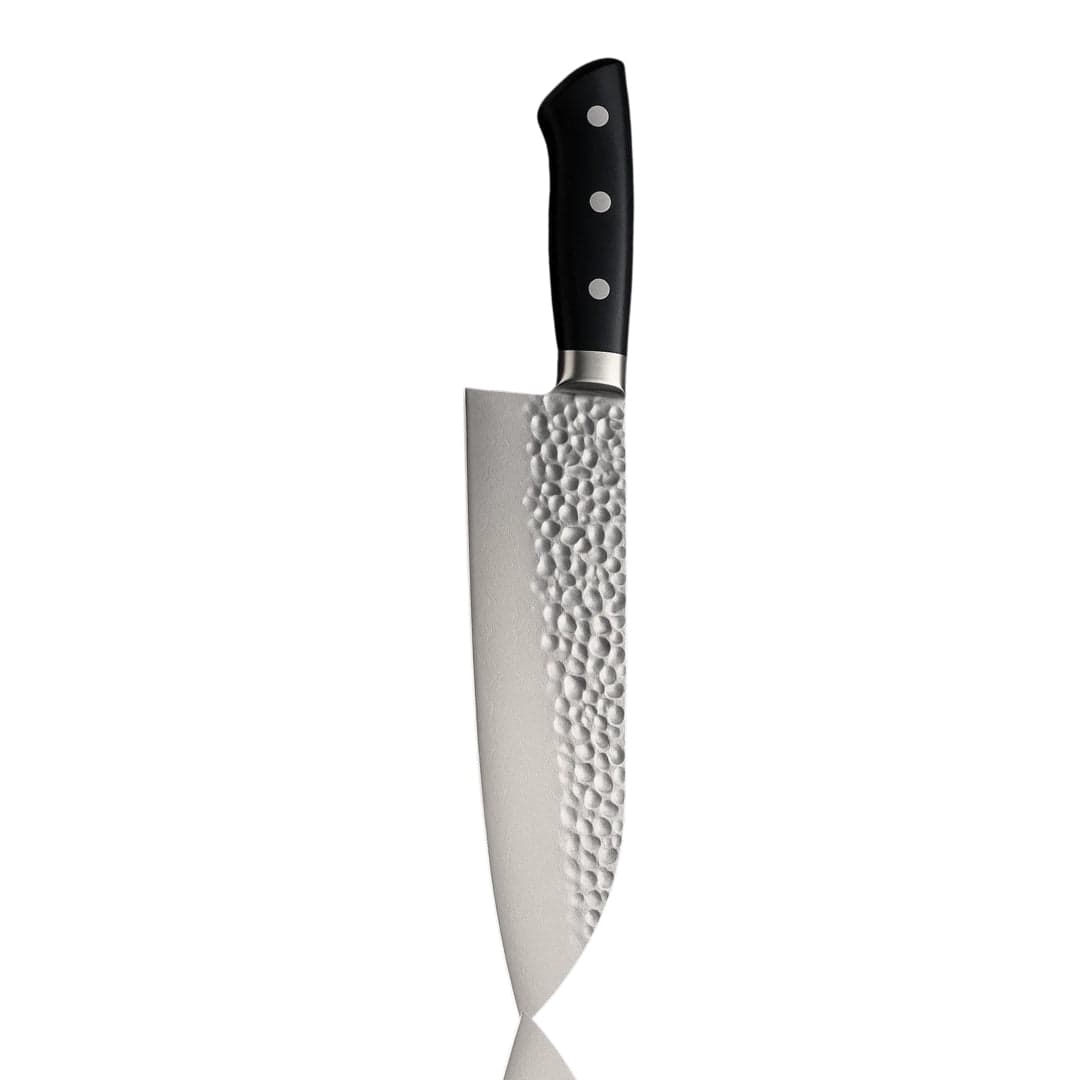
- Japanese Steel Santoku: Knives forged from proprietary Japanese steel blends or VG-10 prioritize a fine, hard edge and consistent, low-maintenance performance — a strong choice if you want maximum sharpness with straightforward care.
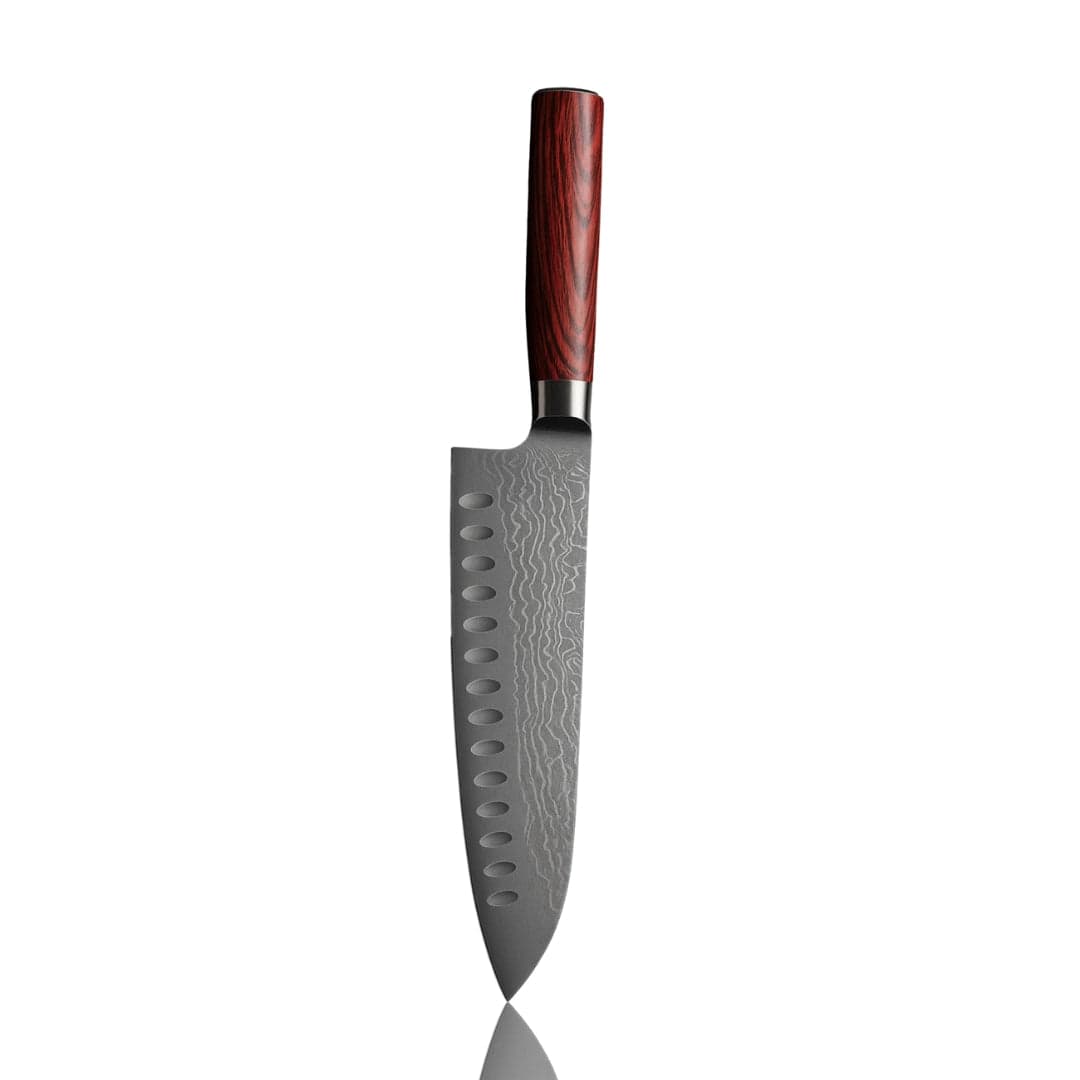
- Santoku Damascus Knife: Forge-welded from multiple layers of steel, our Damascus santoku blades combine strong edge retention and corrosion resistance with a distinctive layered pattern down the blade — a knife that performs in the kitchen and stands out on the counter.
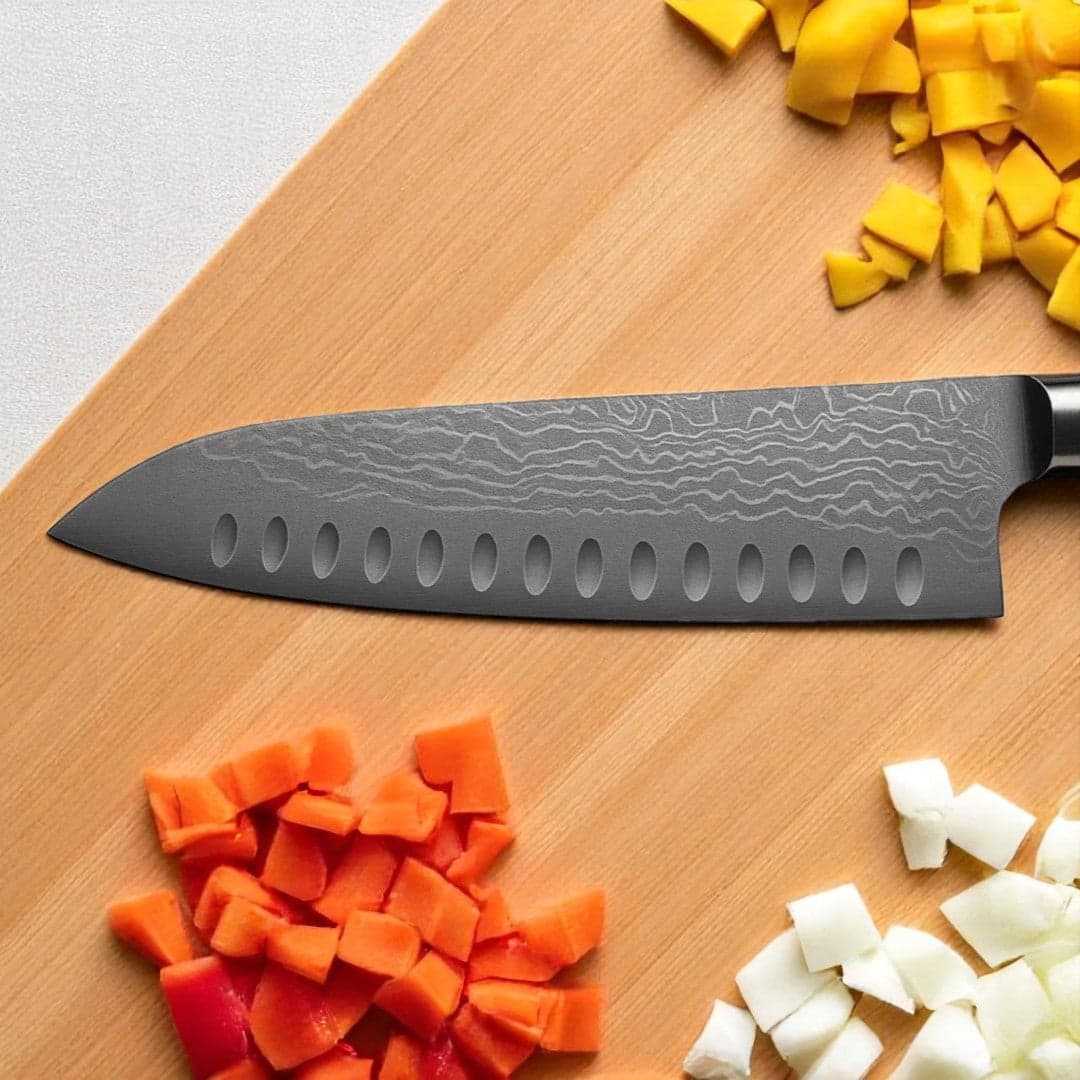
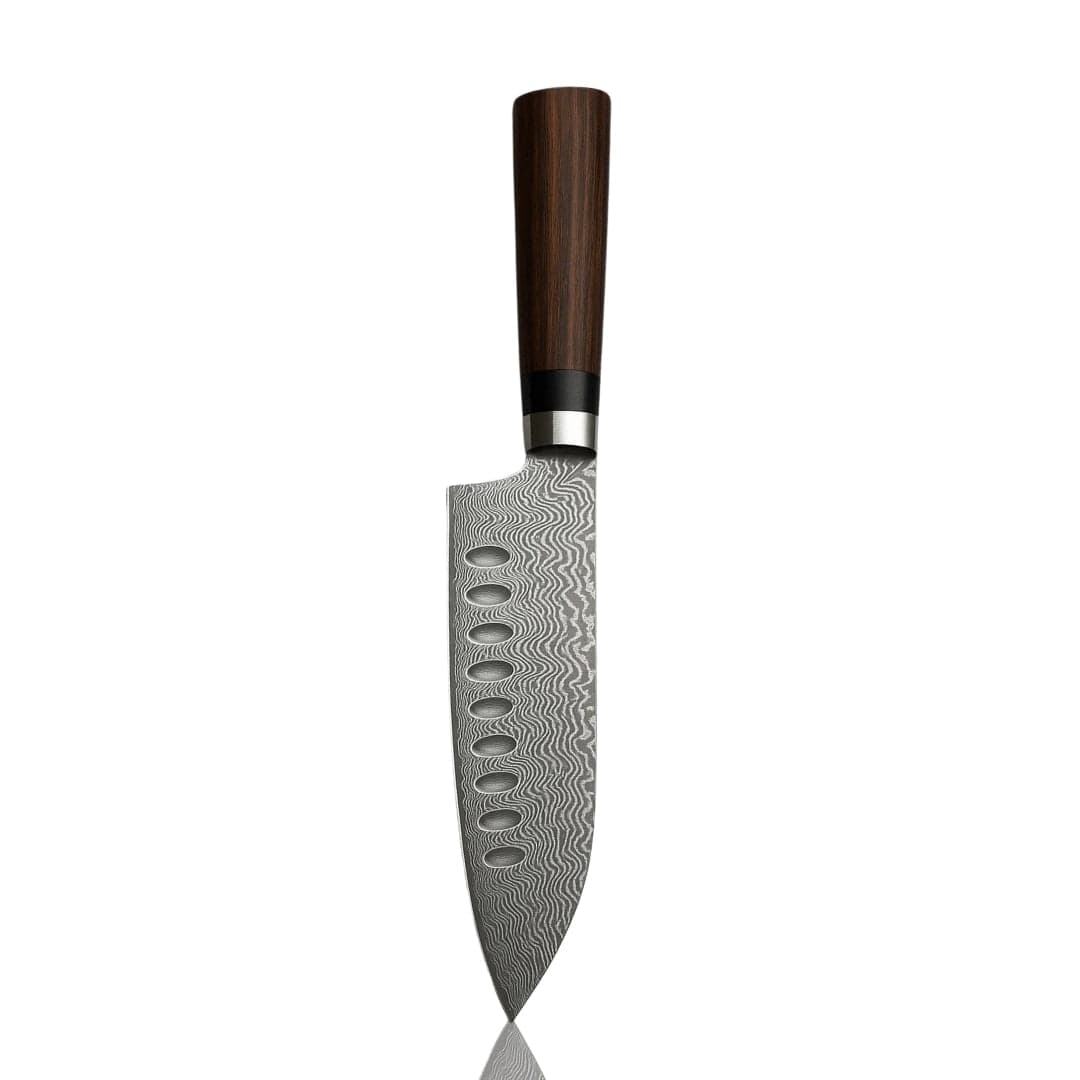
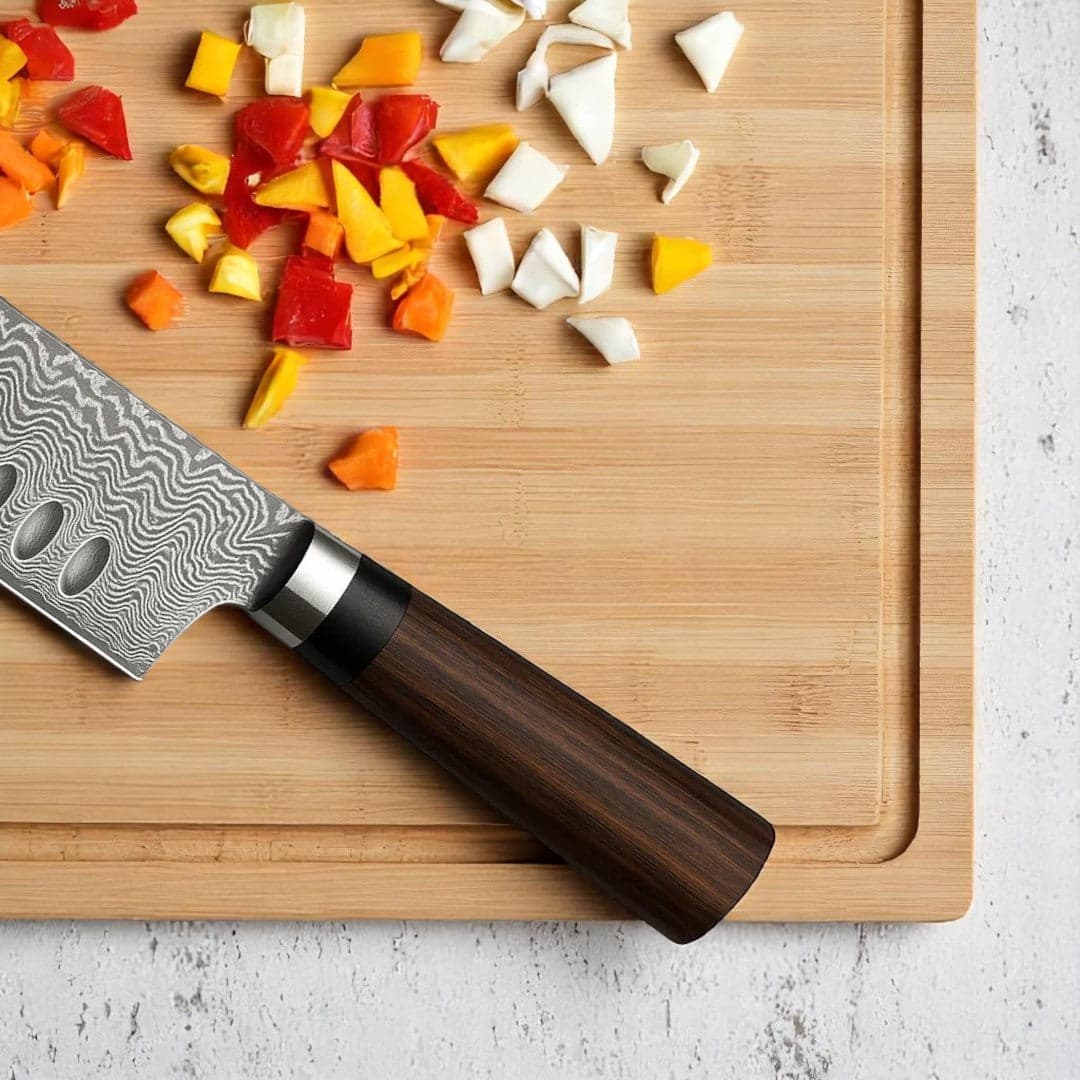
Many models in this collection, regardless of steel type, also feature a Granton edge — the small hollow indentations along the blade — which reduce friction and keep food from sticking as you slice. Handles are shaped for a secure, comfortable grip whether you're working through a Western-style handle or a traditional wa-handle.
What a Santoku Chef Knife Handles Best
- Slicing: Clean, even cuts through meat, fish, and boneless proteins.
- Dicing: Uniform cubes of onions, peppers, and other vegetables with minimal effort.
- Chopping: Herbs, nuts, and vegetables, thanks to the blade's balanced weight and flat profile against the cutting board.
Because a santoku kitchen knife is lighter and shorter than a full-size chef's knife, it also gives you more control for detail work — garnishing, fine julienne cuts, and precise prep where a longer blade feels unwieldy.
Choosing the Right Santoku Knife
If you're outfitting a full kitchen rather than buying a single blade, our Damascus knife sets pair a santoku with complementary blades at a better combined value. Looking for just the santoku on its own? Every knife on this page is available individually, in either a classic 7-inch profile for daily use or a compact 5-inch version for tighter control on smaller ingredients — and in either Japanese steel or Damascus steel, depending on what you value more: low-maintenance sharpness or a showpiece blade.
Caring for Your Santoku Knife
- Hand washes only. Warm water, mild soap, and a soft sponge — skip the dishwasher, which dulls the edge and can damage the handle.
- Dry immediately. Leaving moisture on carbon or Damascus steel invites rust, even on high-quality blades.
- Hone regularly, sharpen occasionally. A honing steel between uses keeps the edge aligned; a whetstone restores it when it starts to dull.
- Store properly. A knife block, magnetic strip, or blade guard protects the edge from chipping against other utensils. Browse our knife accessories for sheaths and storage options.
Why Buy Your Santoku Knife From True Knife
Every santoku chef knife we sell is hand-forged rather than mass-stamped, so you get consistent blade geometry, a true edge, and the kind of balance that makes daily prep work faster and safer. Whether you're after a traditional Japanese santoku with a wa-handle or a hand-forged santoku damascus knife for your everyday cooking, this collection is built to perform first and look sharp doing it.
FREQUENTLY ASKED QUESTIONS
What are Santoku knives used for?
Santoku knives are versatile kitchen knives designed for slicing, dicing, and chopping meat, fish, and vegetables. Their flat edge and lightweight balance make them ideal for everyday prep, from garnishing to full meal prep.
What is the difference between a Santoku knife and a chef knife?
A Santoku knife has a shorter, flatter blade built for push-cutting straight down through ingredients, while a chef's knife has a longer, curved blade suited to a rocking motion. The Santoku's shape gives better control for fine dicing and slicing, while a chef's knife handles larger cuts of meat and produce more efficiently.
What is the unique shape of a Santoku blade?
A Santoku blade has a sheep's-foot profile: a mostly flat cutting edge that curves gently downward near the tip. This shape keeps the blade in full contact with the cutting board and gives excellent control for detailed slicing work.
Should I choose a Japanese steel or Damascus steel Santoku knife?
Japanese steel Santoku knives, often VG-10, prioritize a fine, hard edge with straightforward maintenance. Damascus steel Santoku knives are forge-welded from multiple layers, offering strong edge retention and corrosion resistance along with a distinctive layered pattern. Both perform well daily; the choice comes down to whether you prefer low-maintenance sharpness or a standout look.
Is 'Santoku' sometimes spelled differently?
Yes. Santoku is commonly misspelled as Santoko, Santouka, Santuko, Sentoku, or Santaku, and occasionally confused with 'Sudoku,' the number puzzle game. All of these refer to the same Japanese kitchen knife.
What size Santoku knife should I buy?
Most cooks choose a 7-inch Santoku for daily use, since it balances cutting capacity with control. A 5-inch Santoku offers tighter precision for smaller ingredients and detailed work, making it a good second knife rather than a primary one.
Why have Japanese Santoku knives become so popular?
Santoku knives combine the versatility of a chef's knife with lighter weight and tighter control, making them a favorite for both professional chefs and home cooks who want one reliable blade for most kitchen tasks.