Damascus Chef Knives
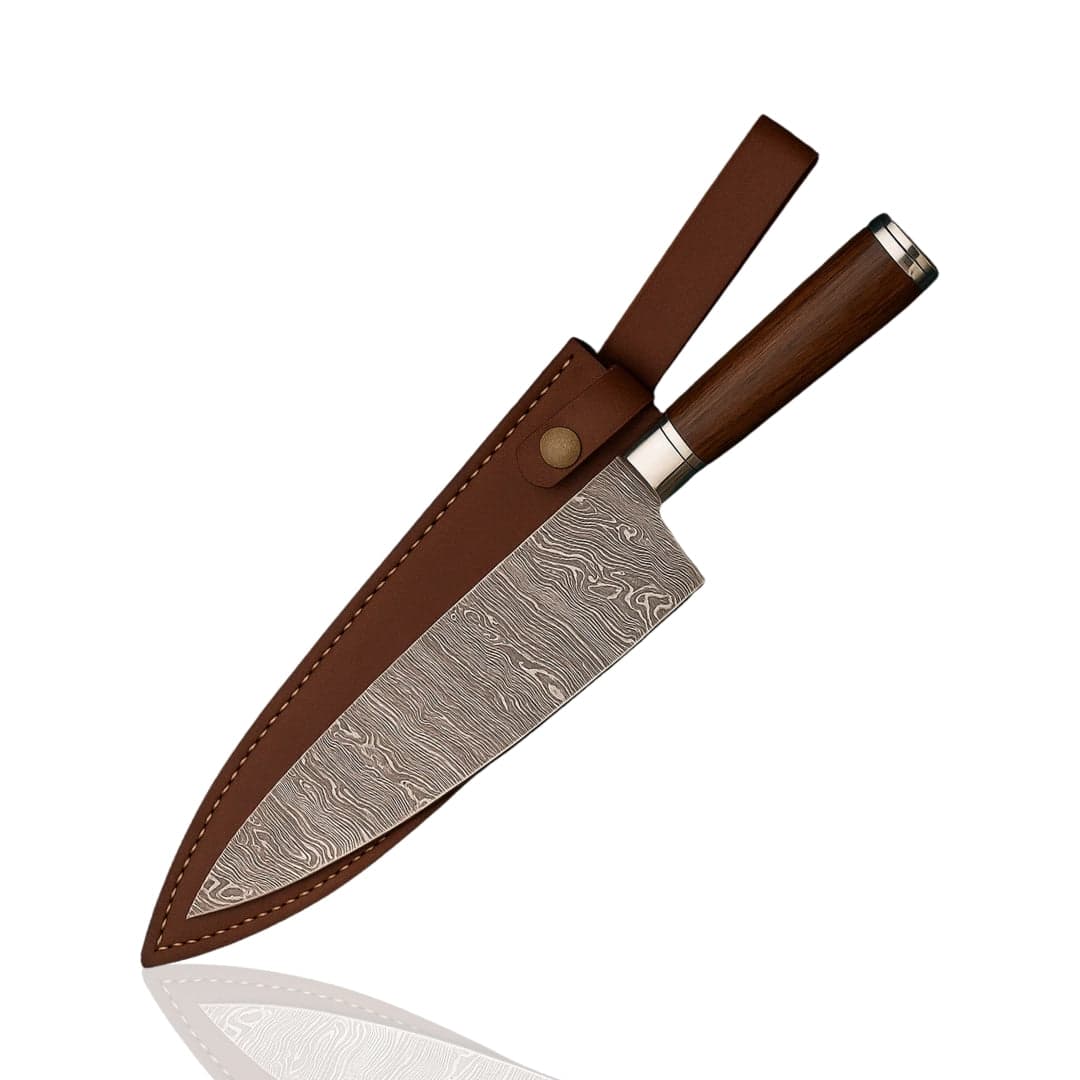
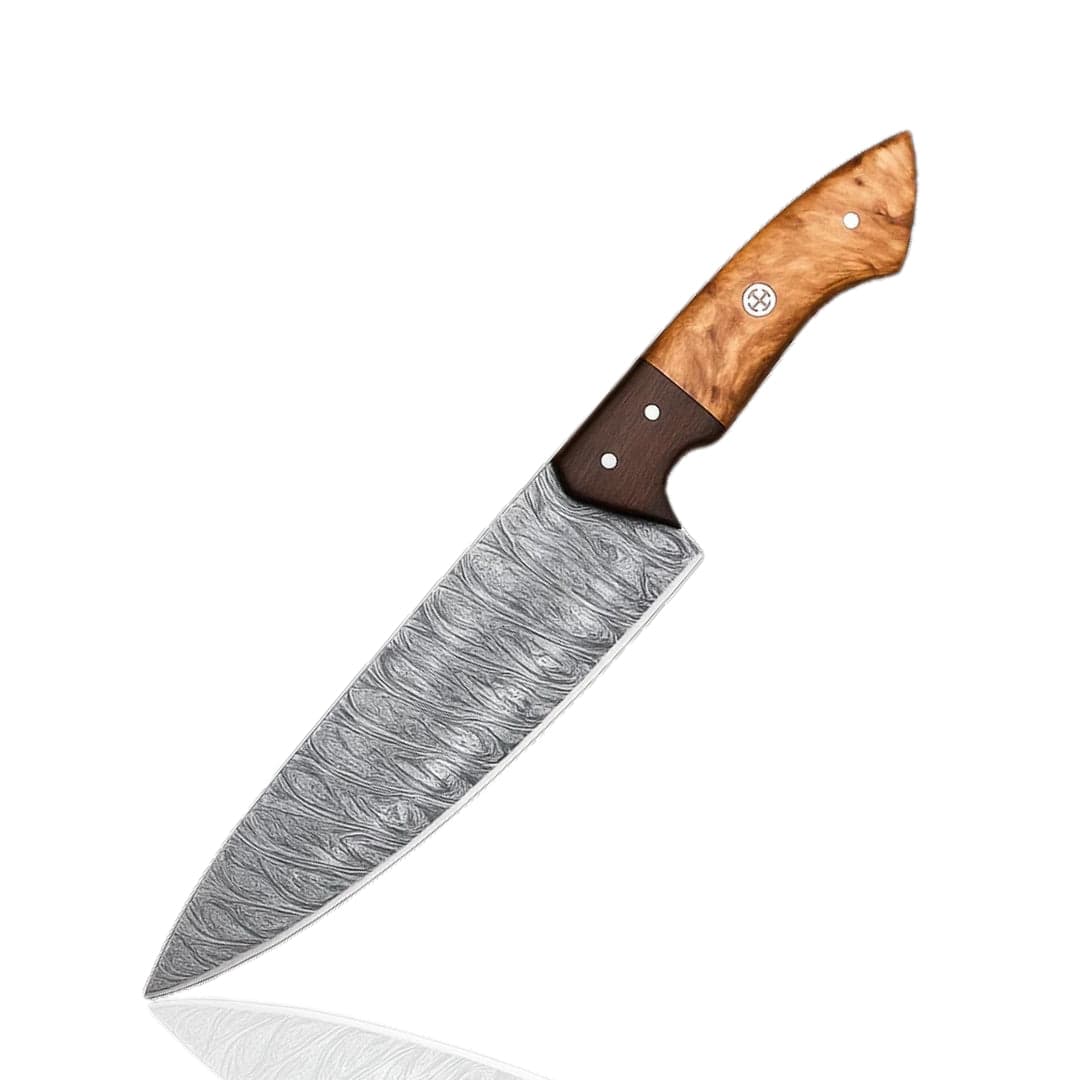
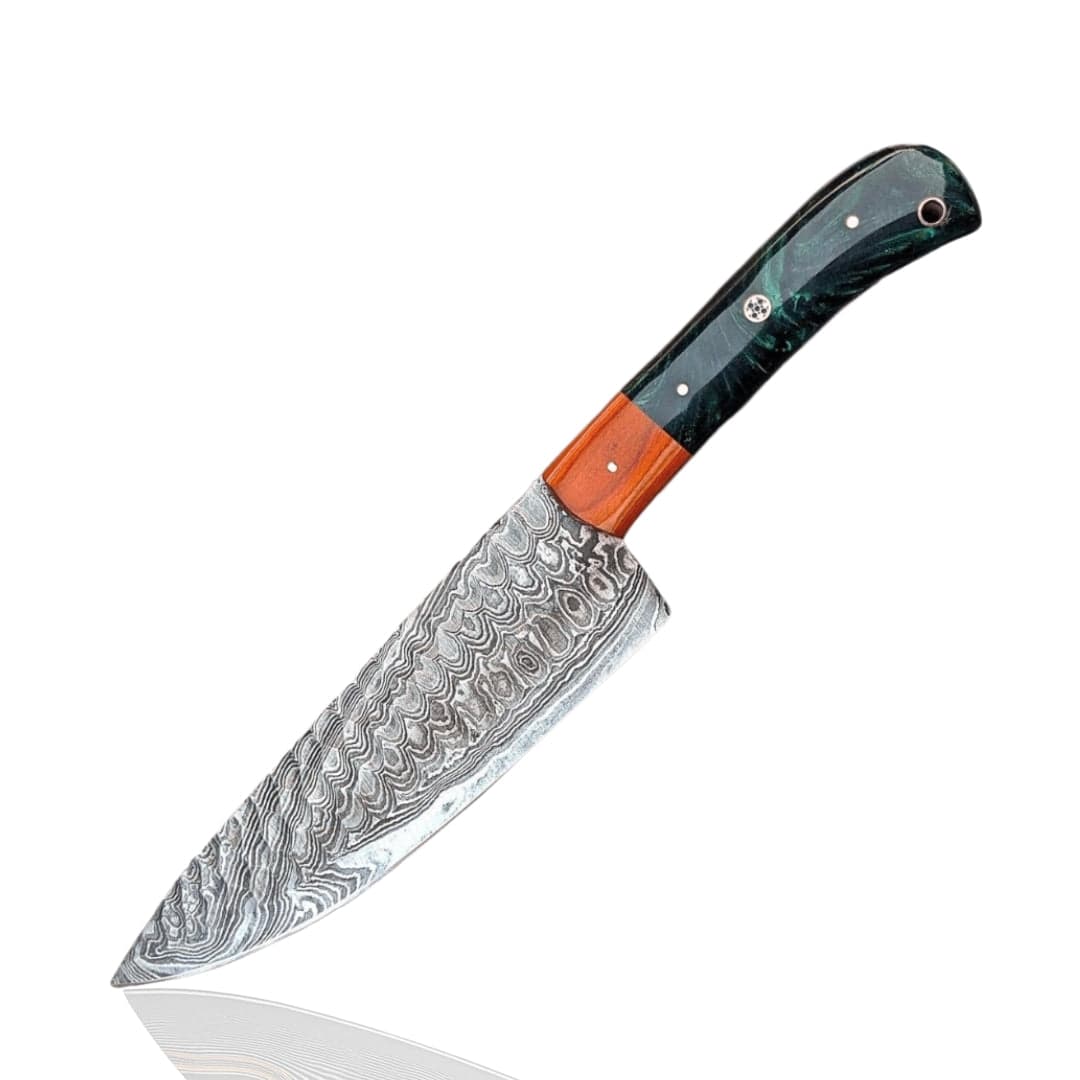
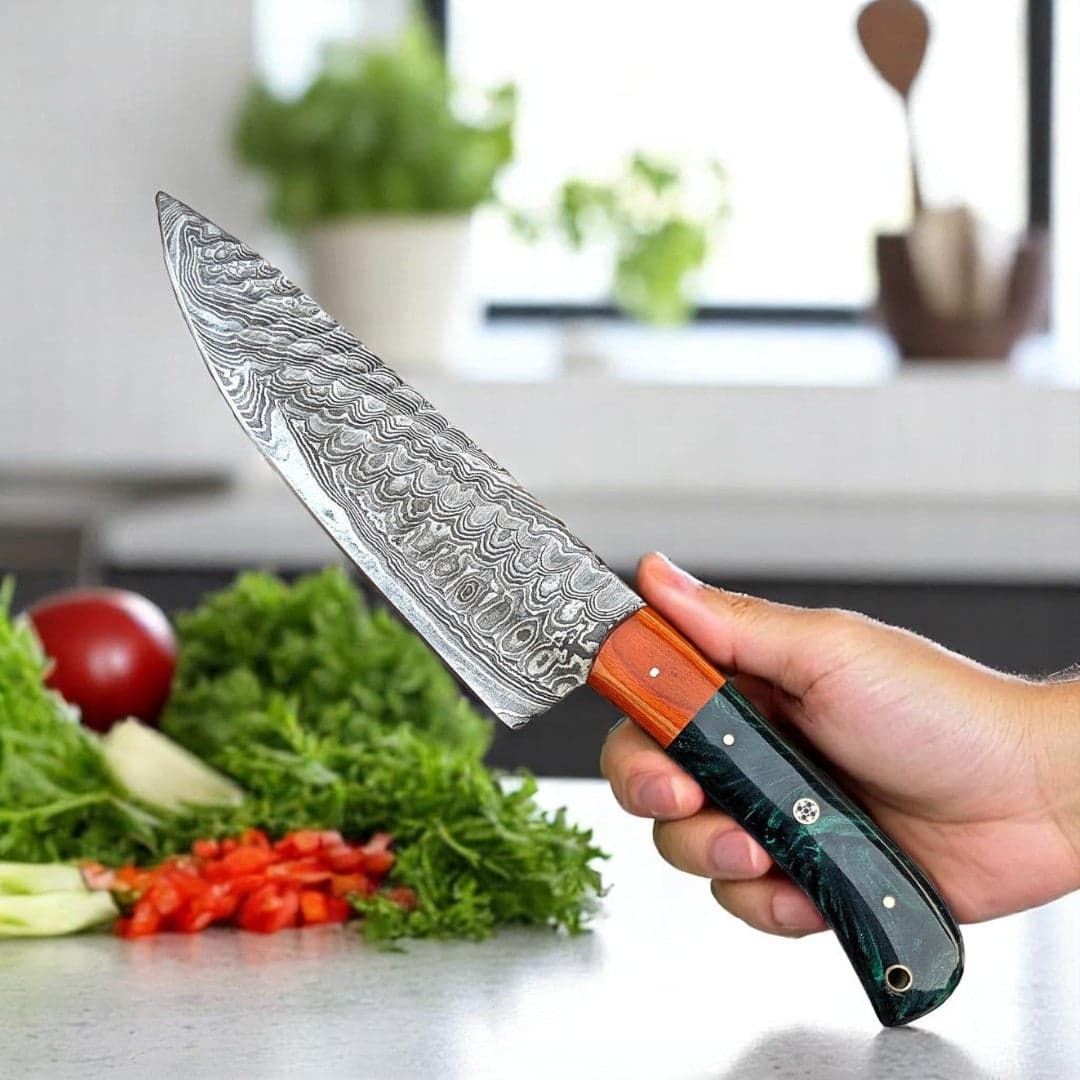
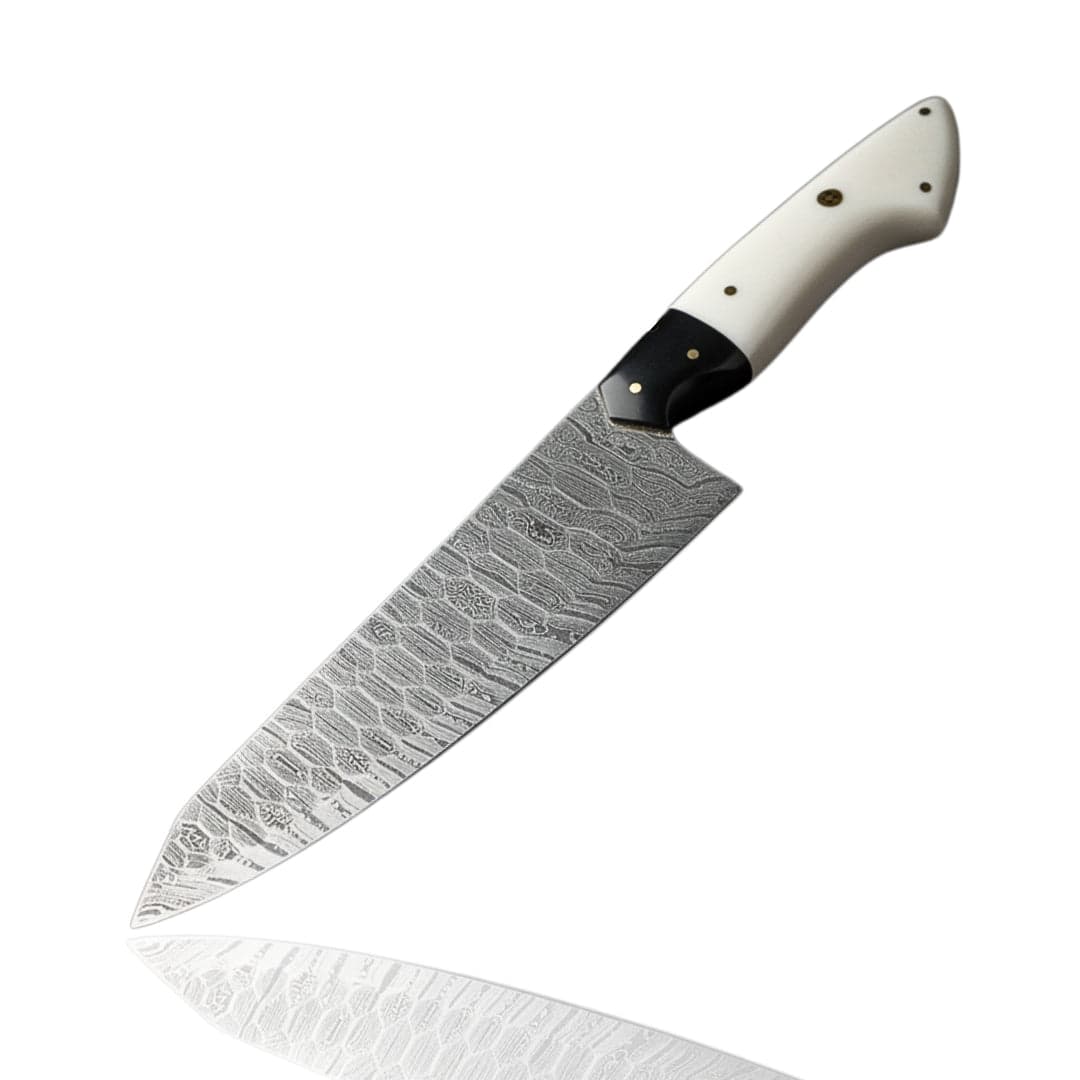
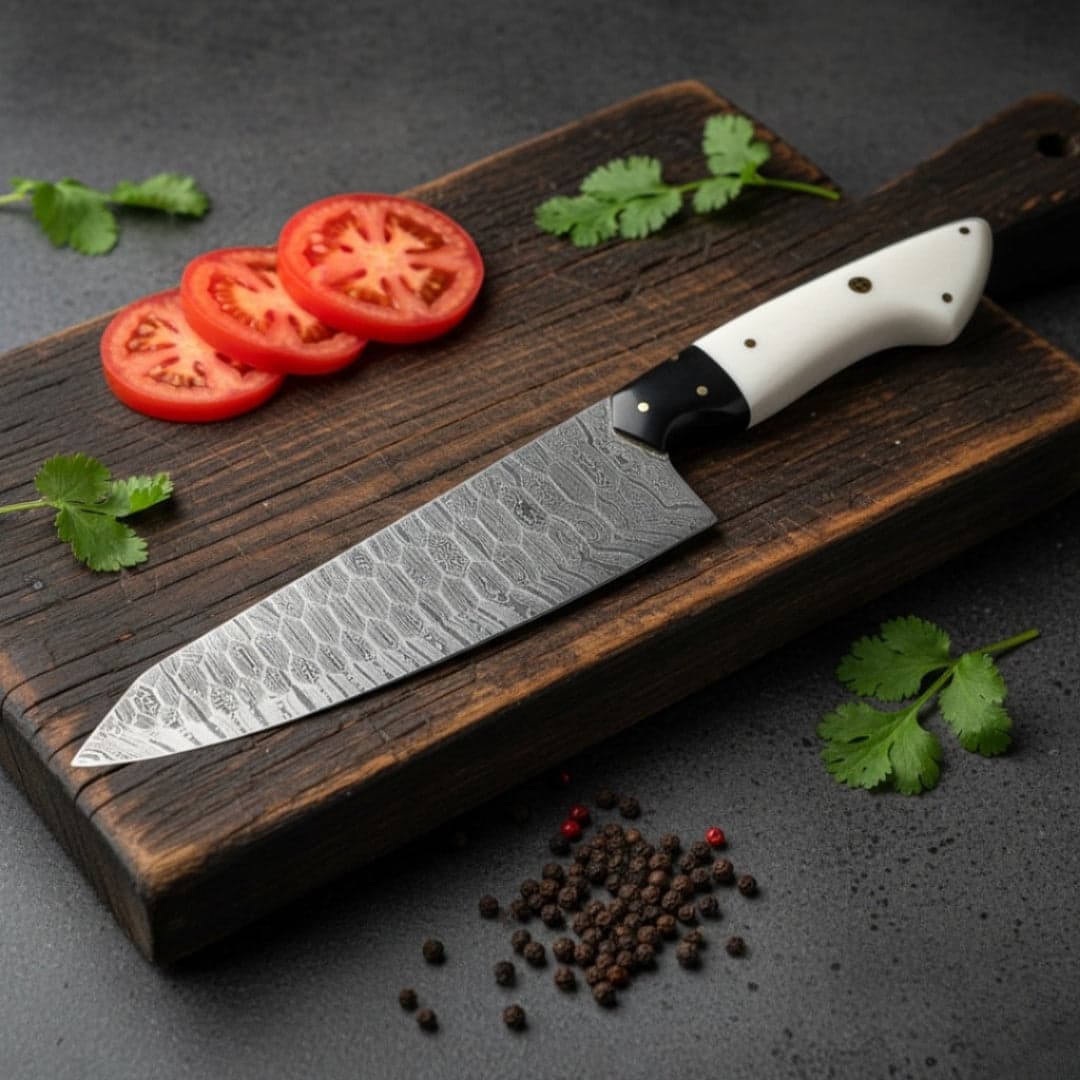
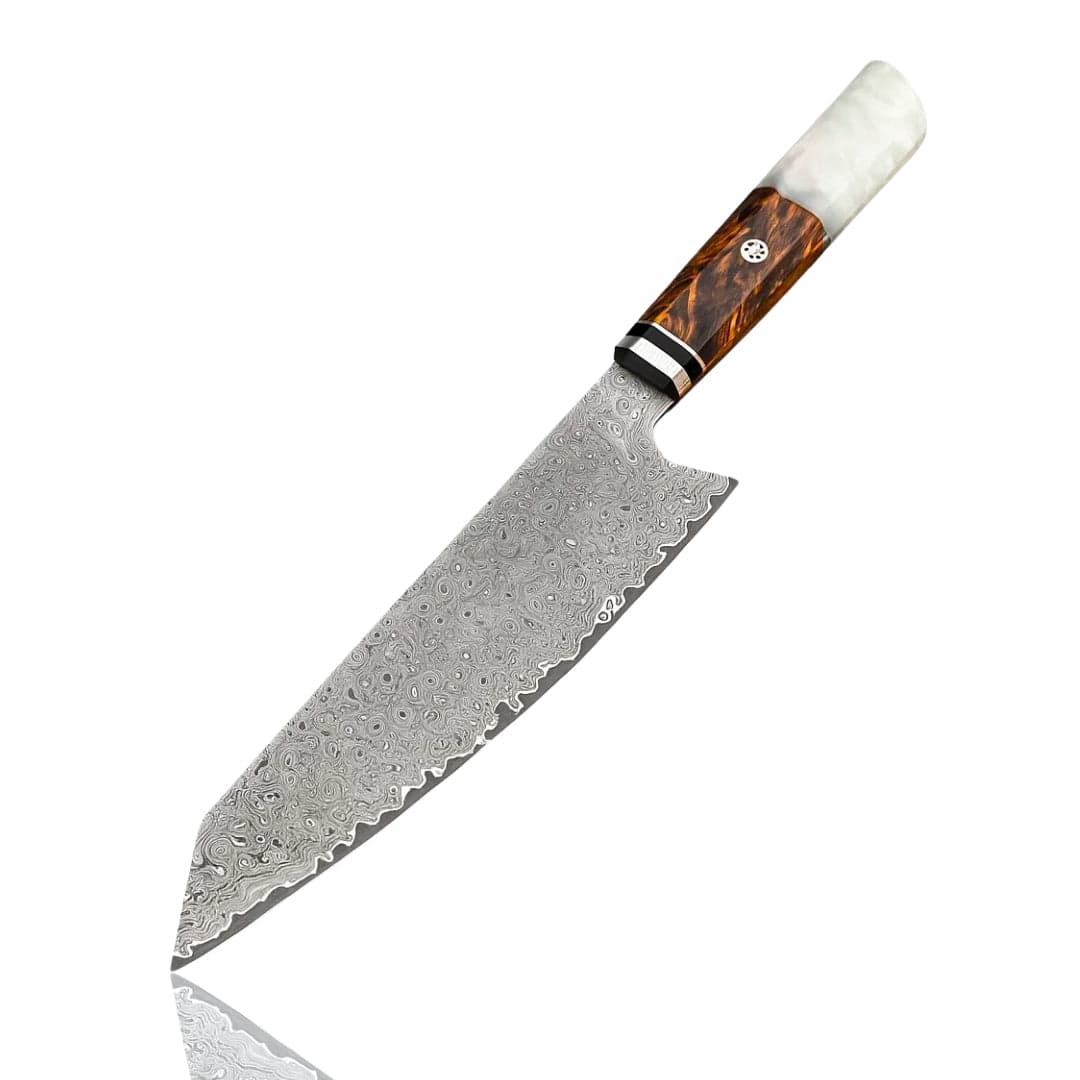
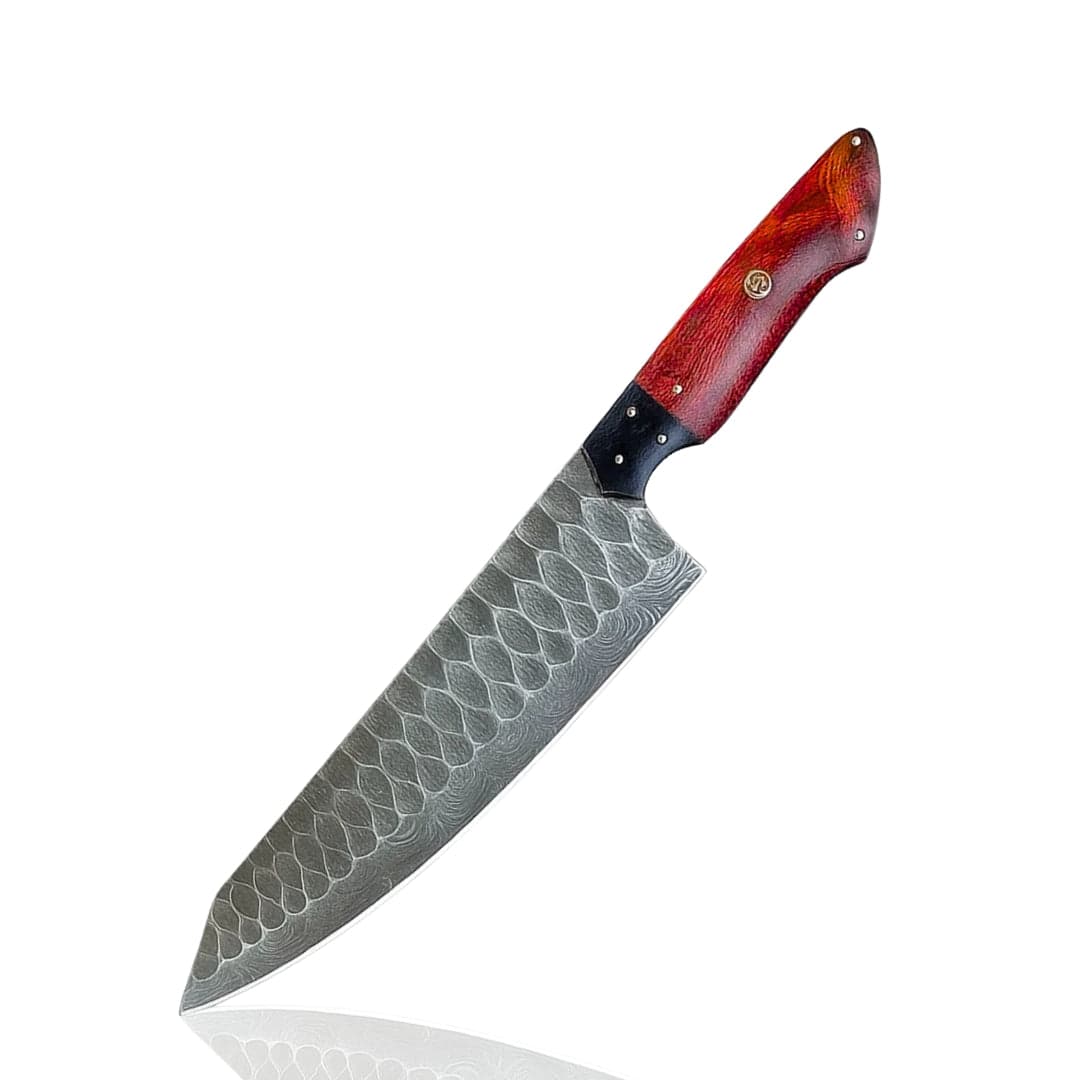
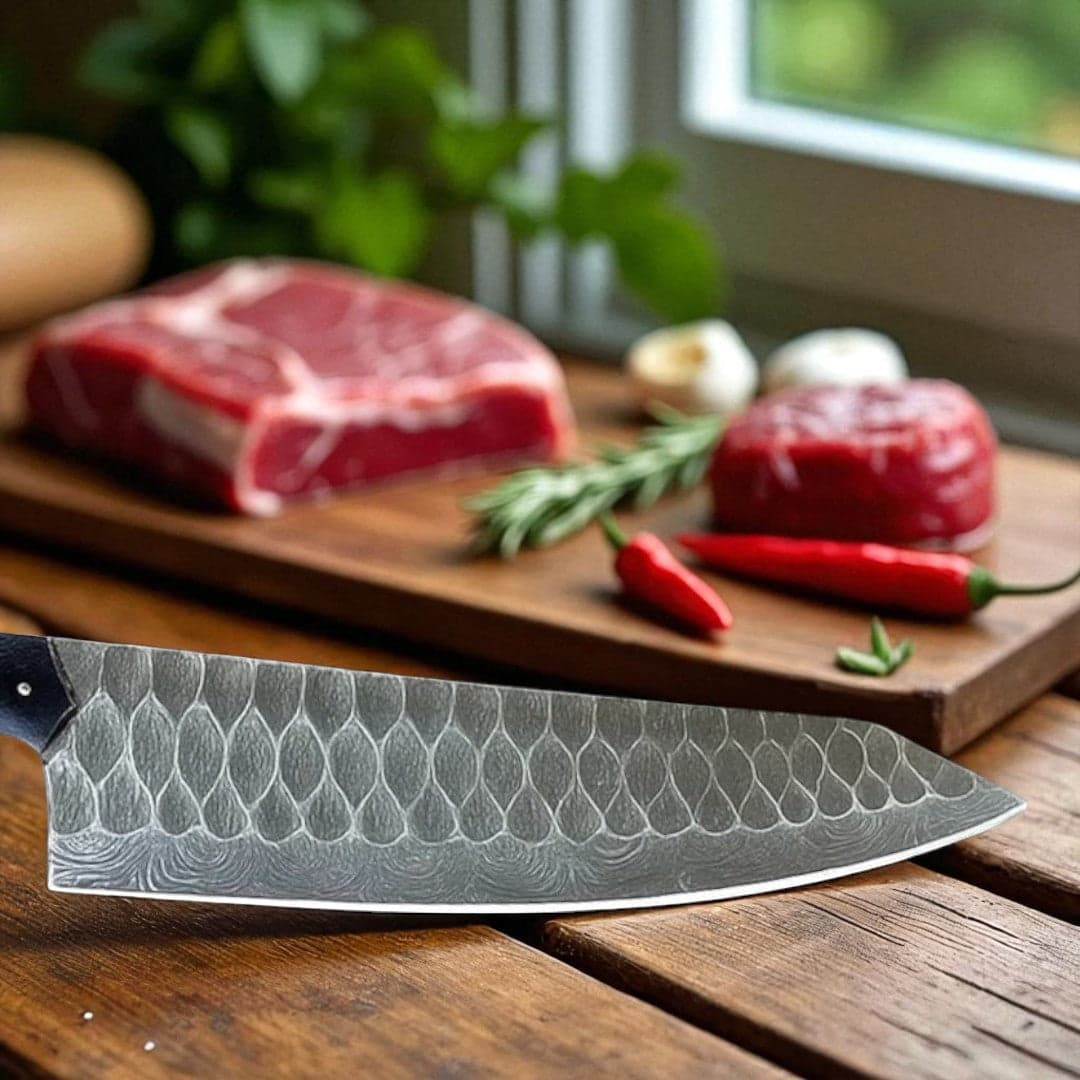
Handmade Damascus chef knives built for daily cooking and professional use. Every Damascus kitchen knife here is hand-forged for a sharp, long-lasting edge, with 8-inch and 10-inch options to suit everyday prep or heavier culinary work. Each blade carries a distinctive wave pattern, unique to every knife we make.
Damascus Kitchen Knives, Built Around One Craft
At True Knife, this collection is dedicated entirely to Damascus kitchen knives — chef knives, cooking knives, and kitchen blades, made one at a time rather than mass-produced. That focus lets every Damascus chef's knife here get the attention a general-purpose kitchen set often can't provide.
What Makes a Damascus Chef Knife Different
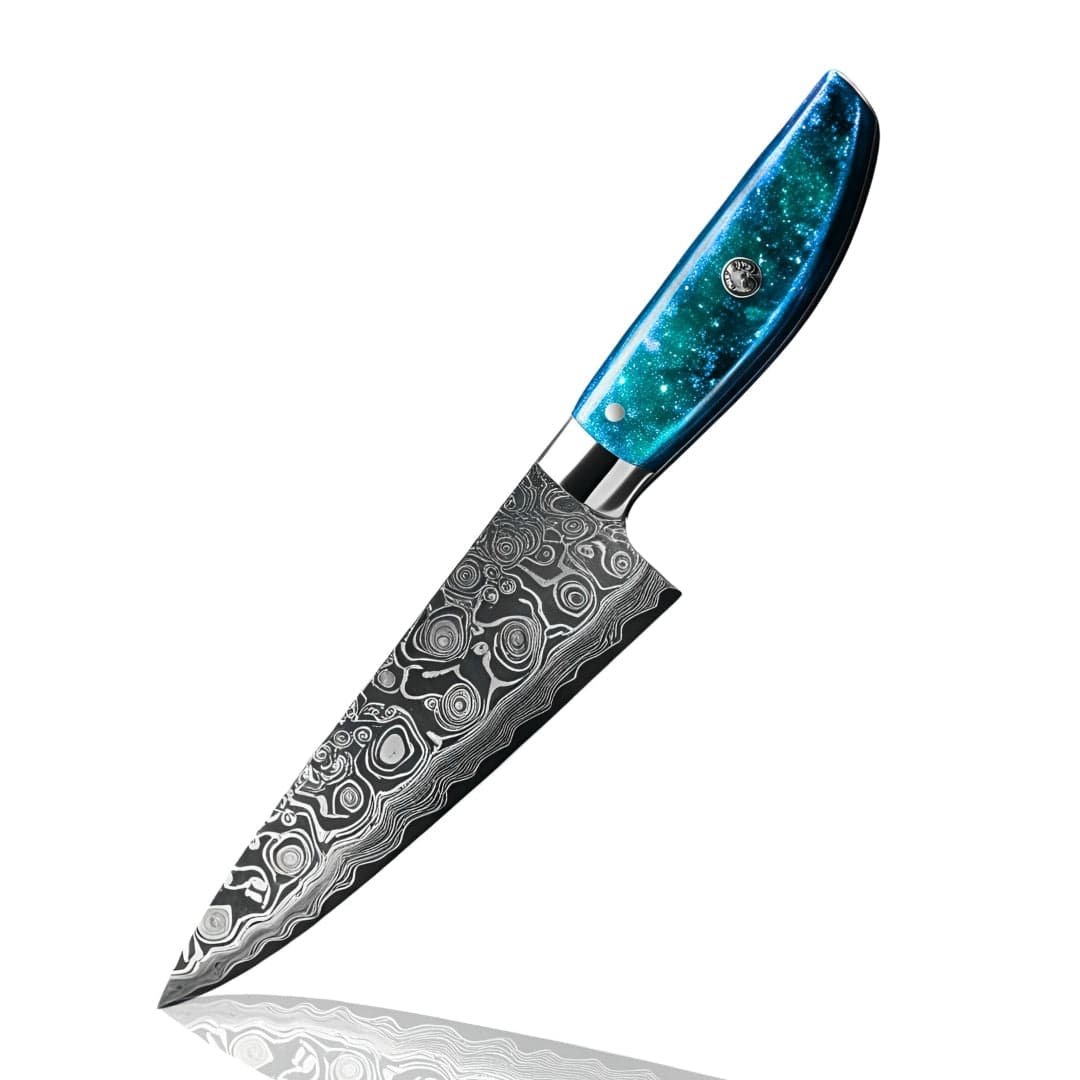
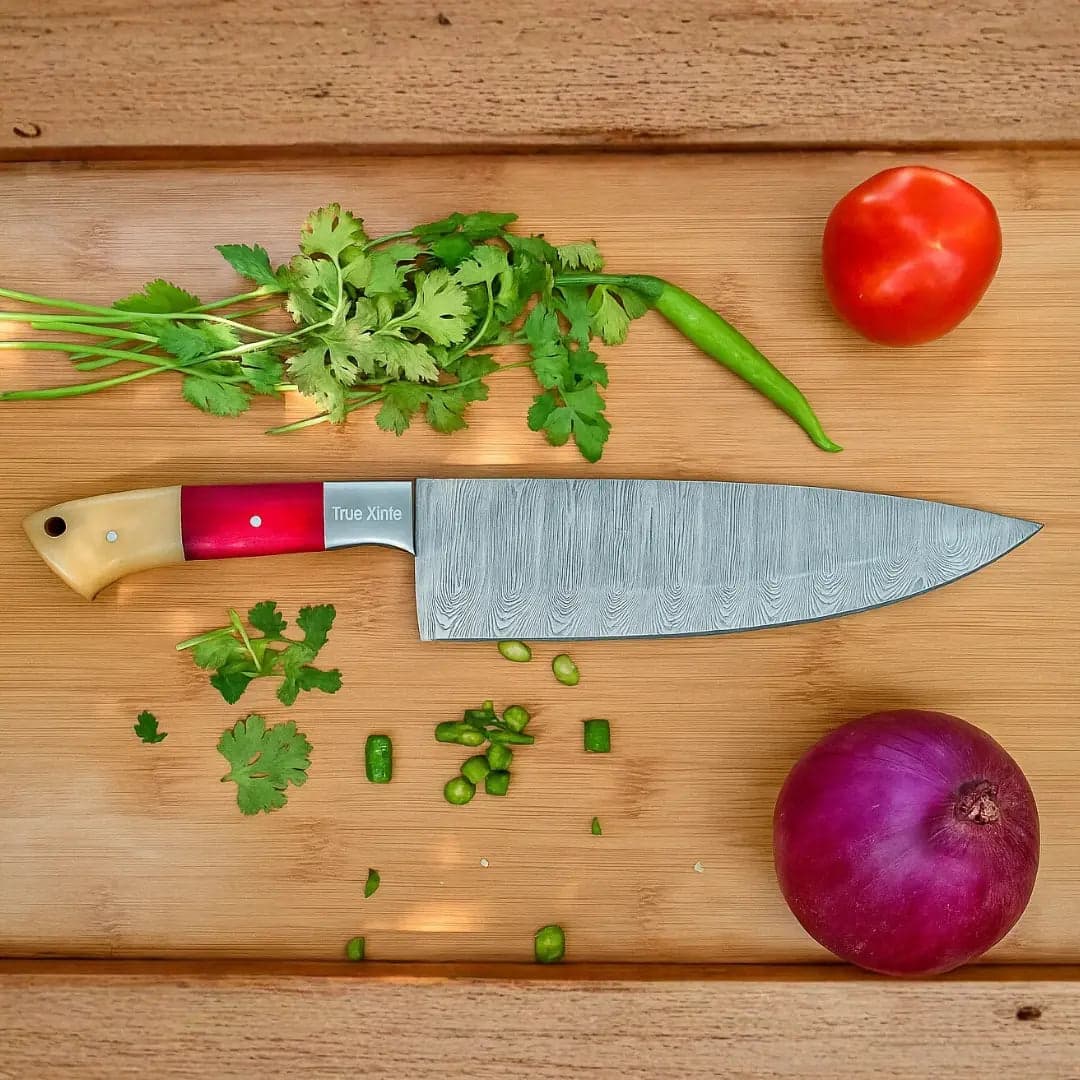
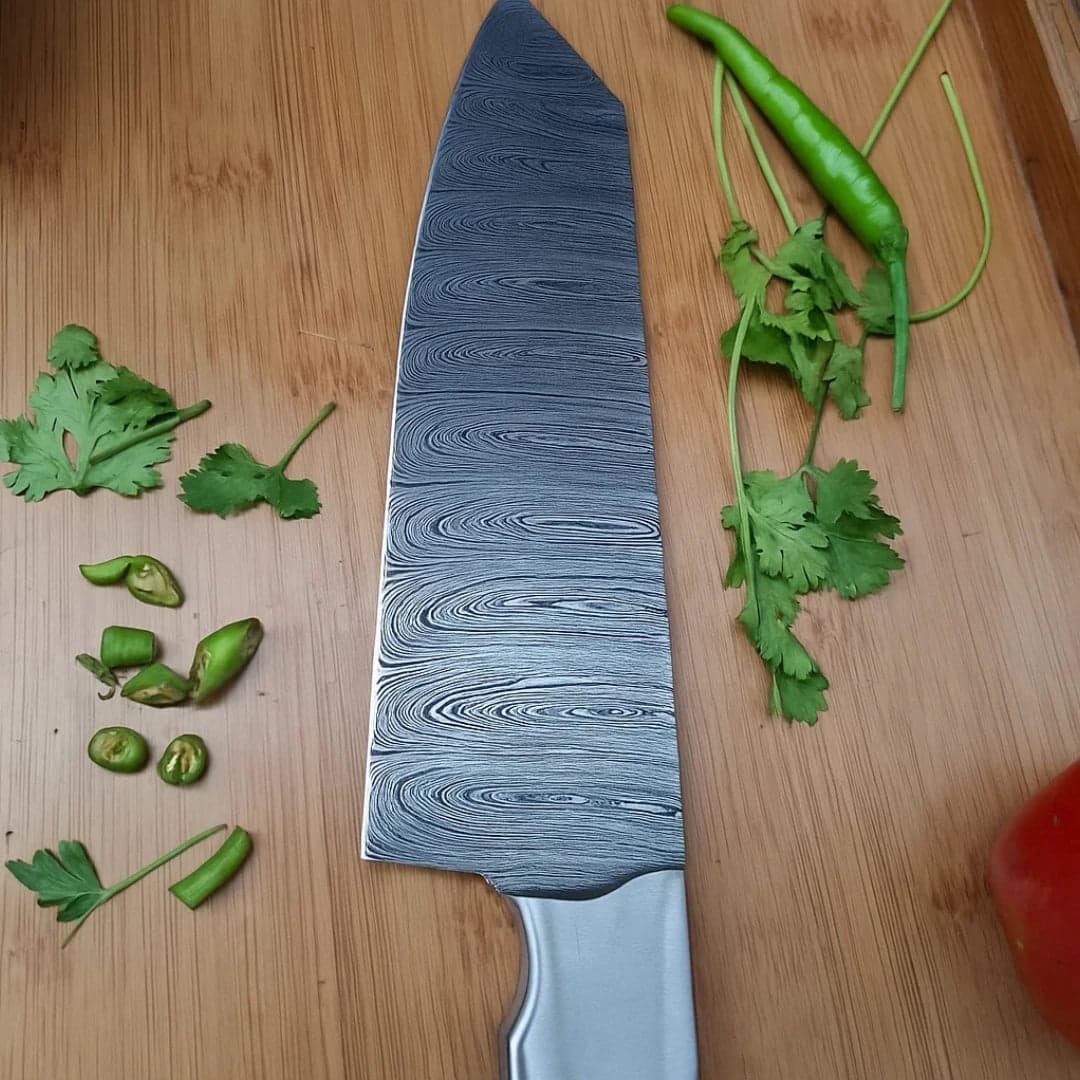
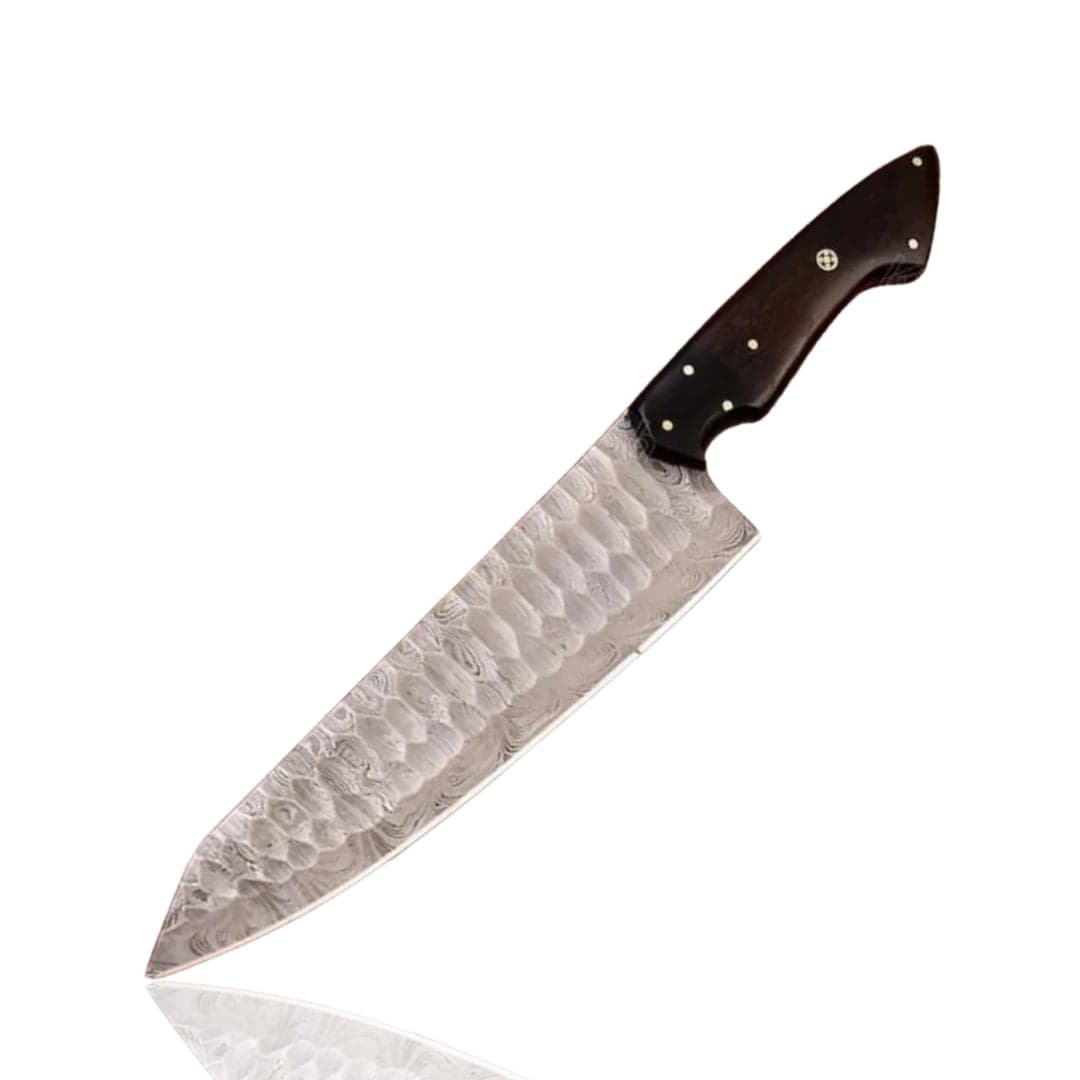
A Damascus steel chef knife isn't defined by its wavy pattern alone. That pattern comes from repeatedly layering and folding steel sheets by hand, a centuries-old forging technique that also affects performance: outer layers add toughness and shock absorption, while a harder core steel carries the edge. It's a genuine forging process, not a surface treatment — the pattern runs through the entire blade.
Choosing Your Damascus Chef Knife: Length and Tang
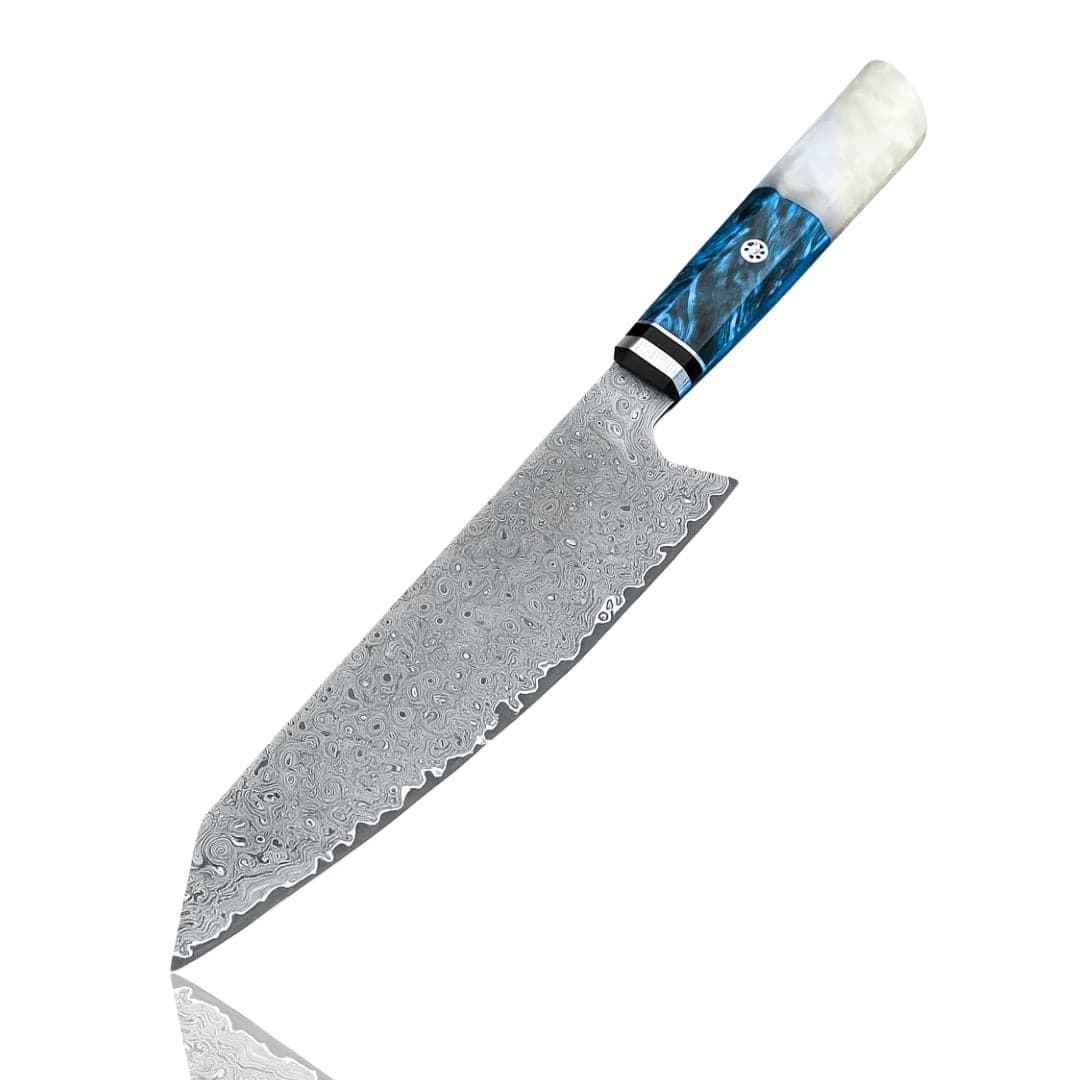
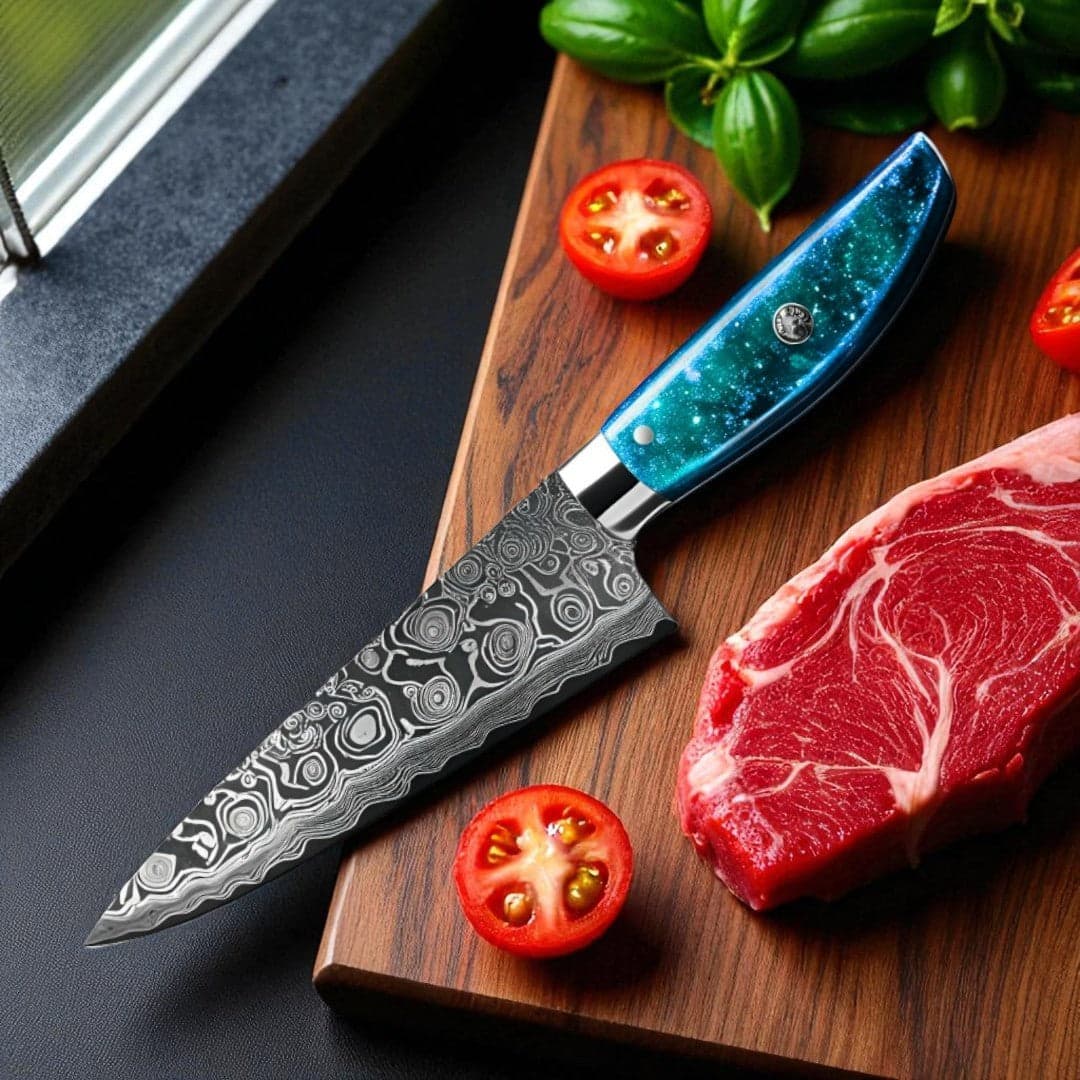
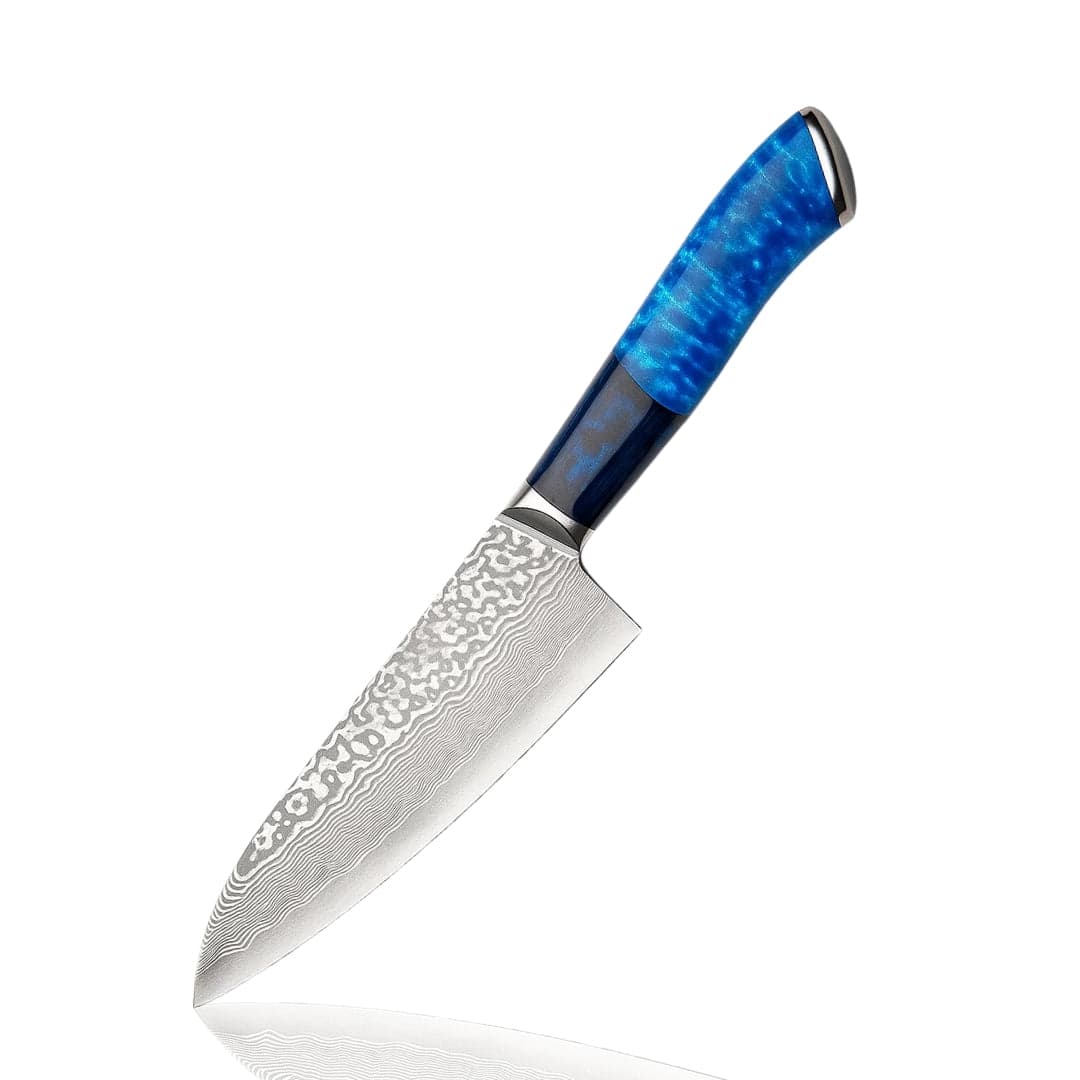
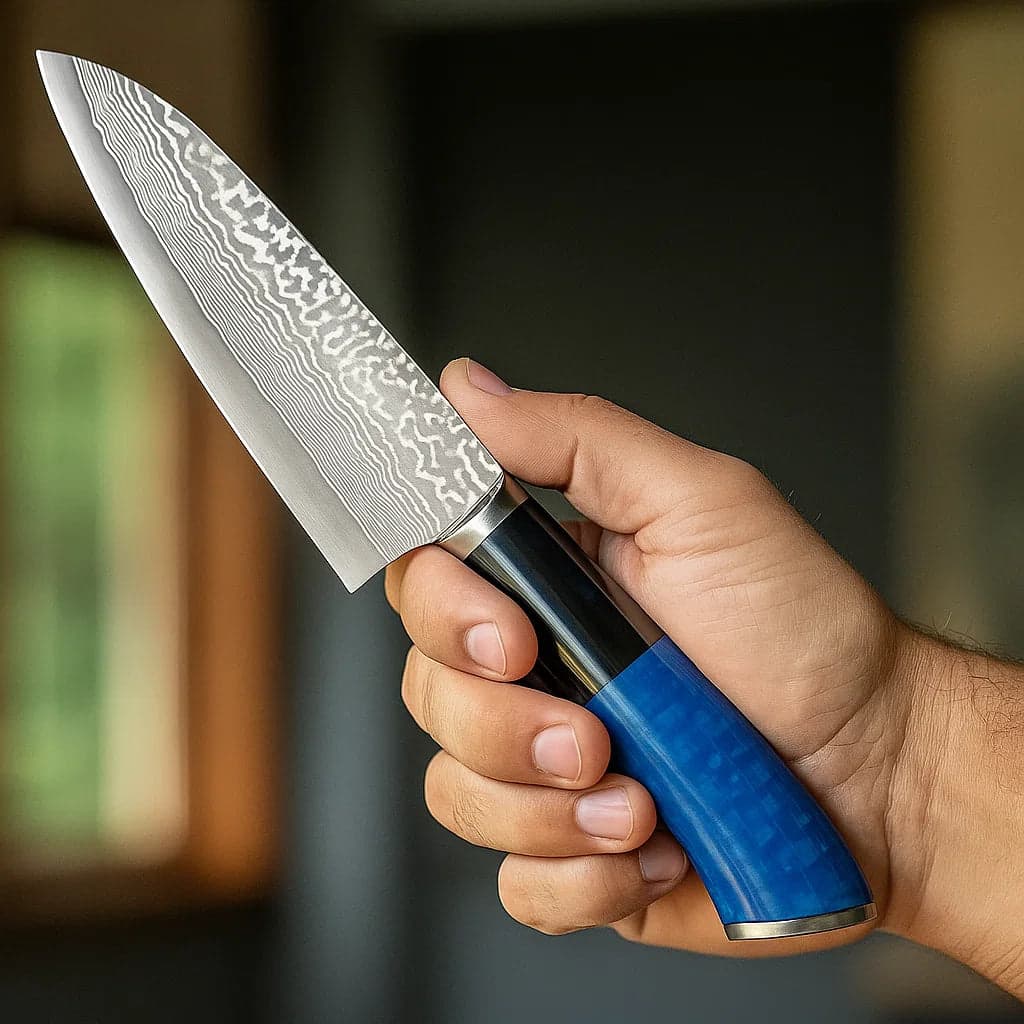
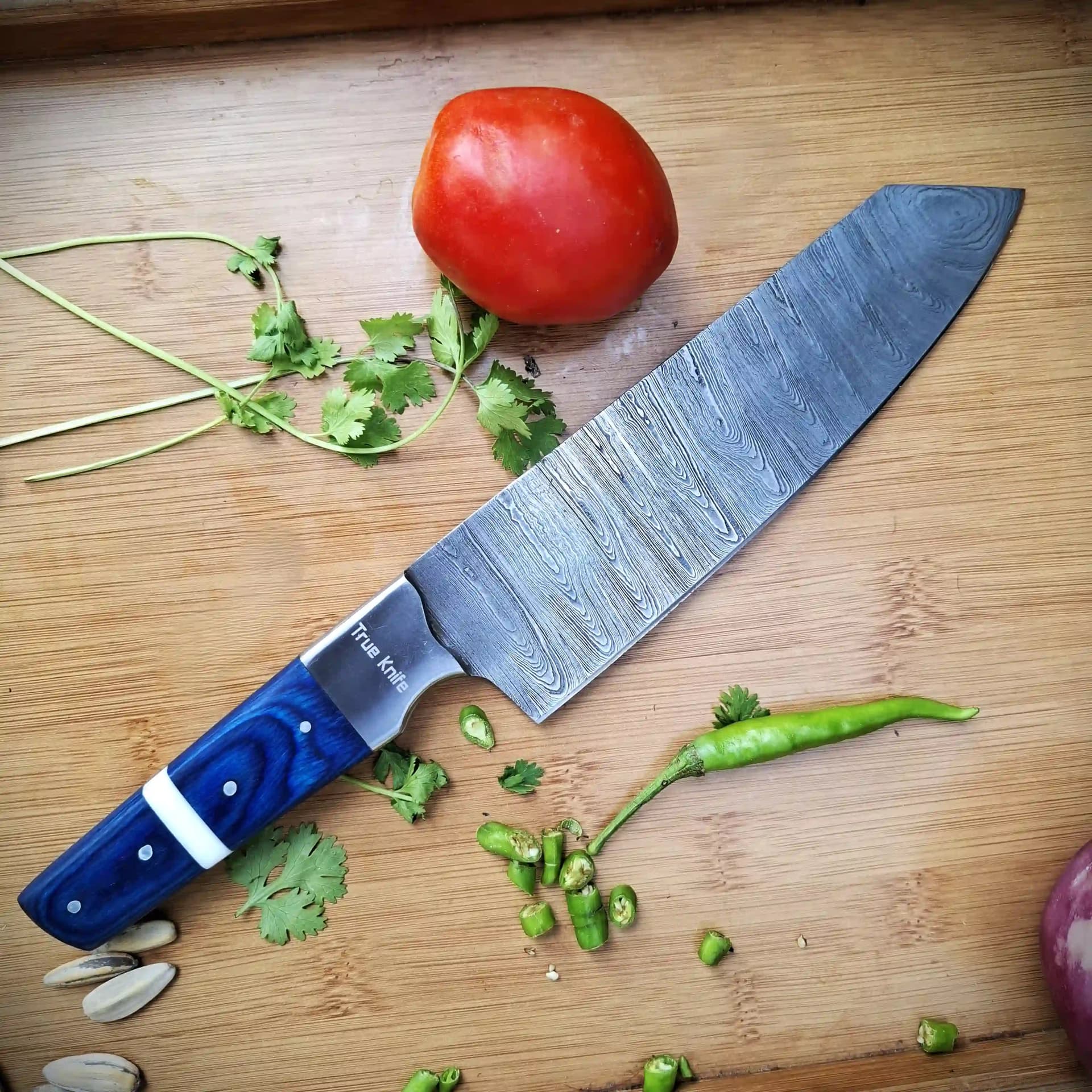
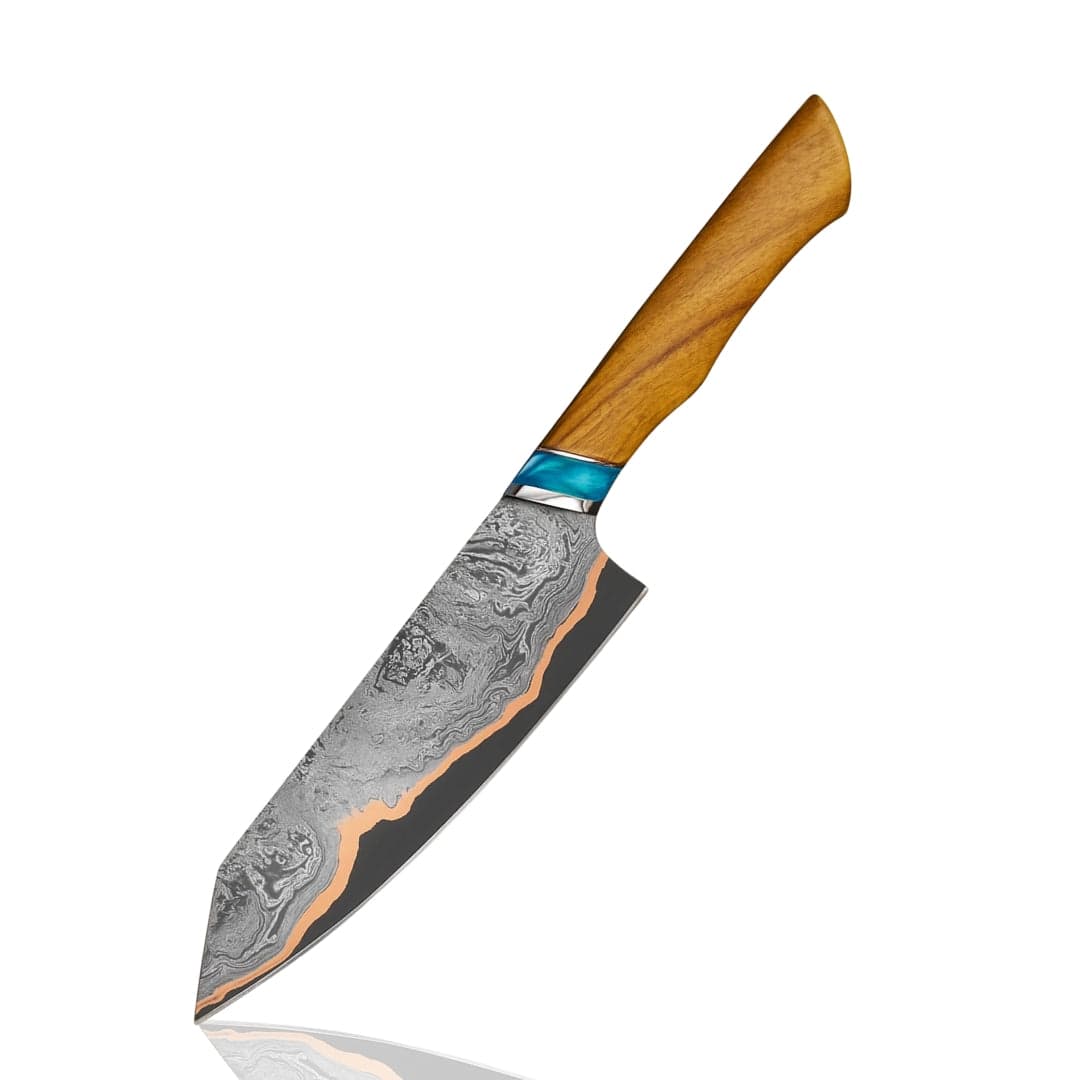
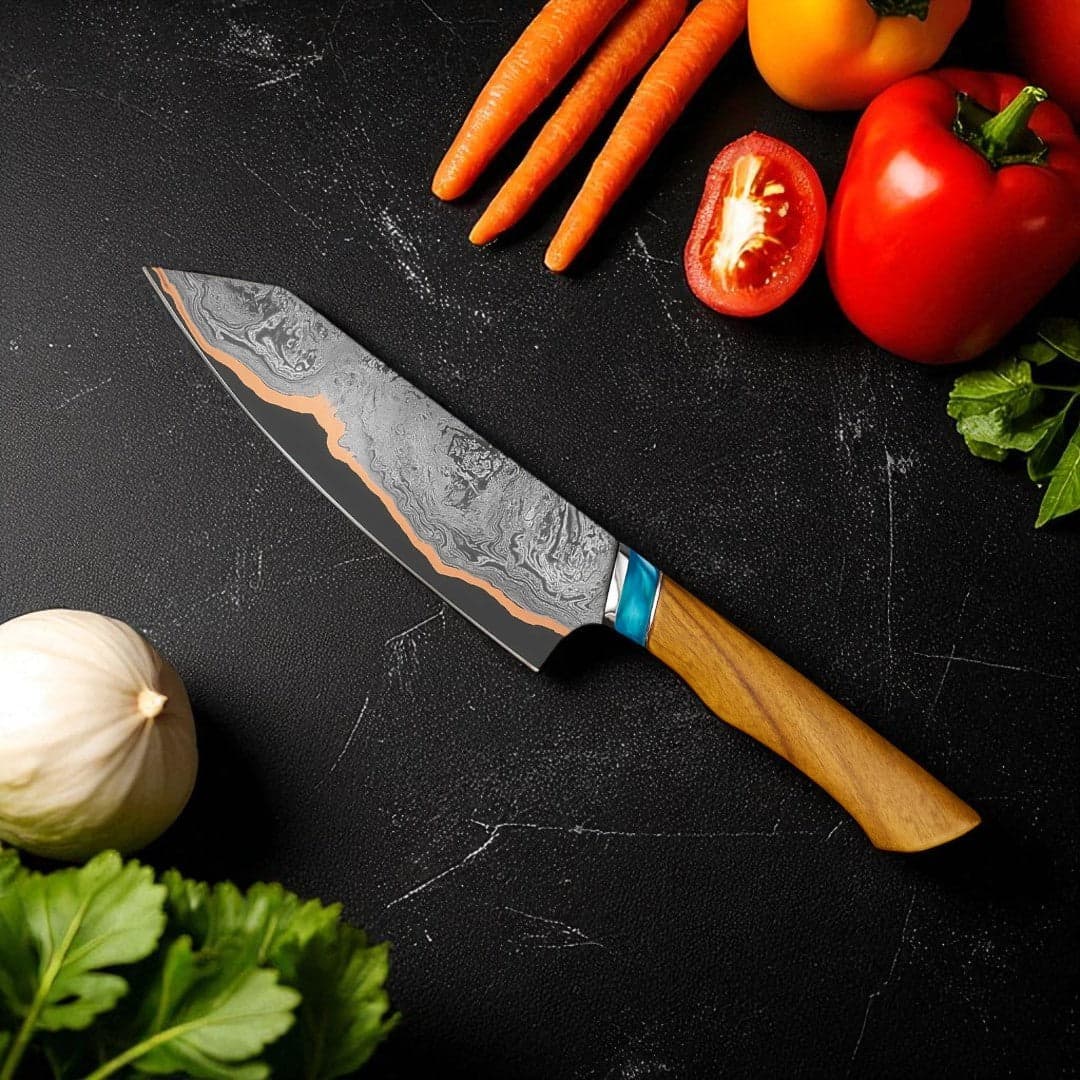
Our Damascus kitchen knives come primarily in 8-inch and 10-inch lengths. The 8-inch chef knife, like the 8" Damascus Chef Knife with Blue Pakkawood Handle, suits daily household cooking and offers easier maneuverability. The 10-inch option gives more leverage for larger cuts, which is why experienced cooks tend to prefer it. Full-tang construction — where the steel runs the full length of the handle — provides the strongest, most balanced option for heavy daily use.
Damascus Japanese Chef Knife
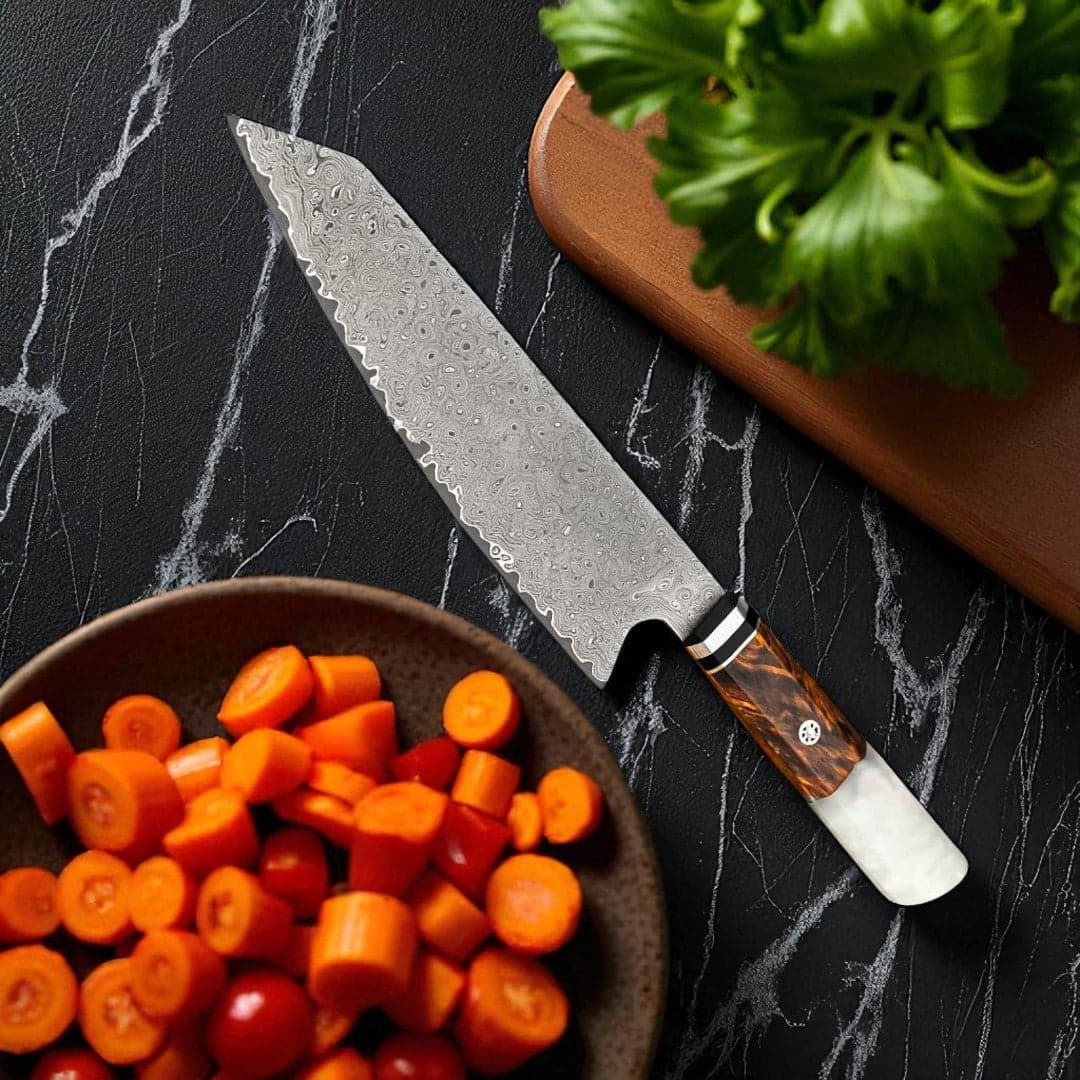
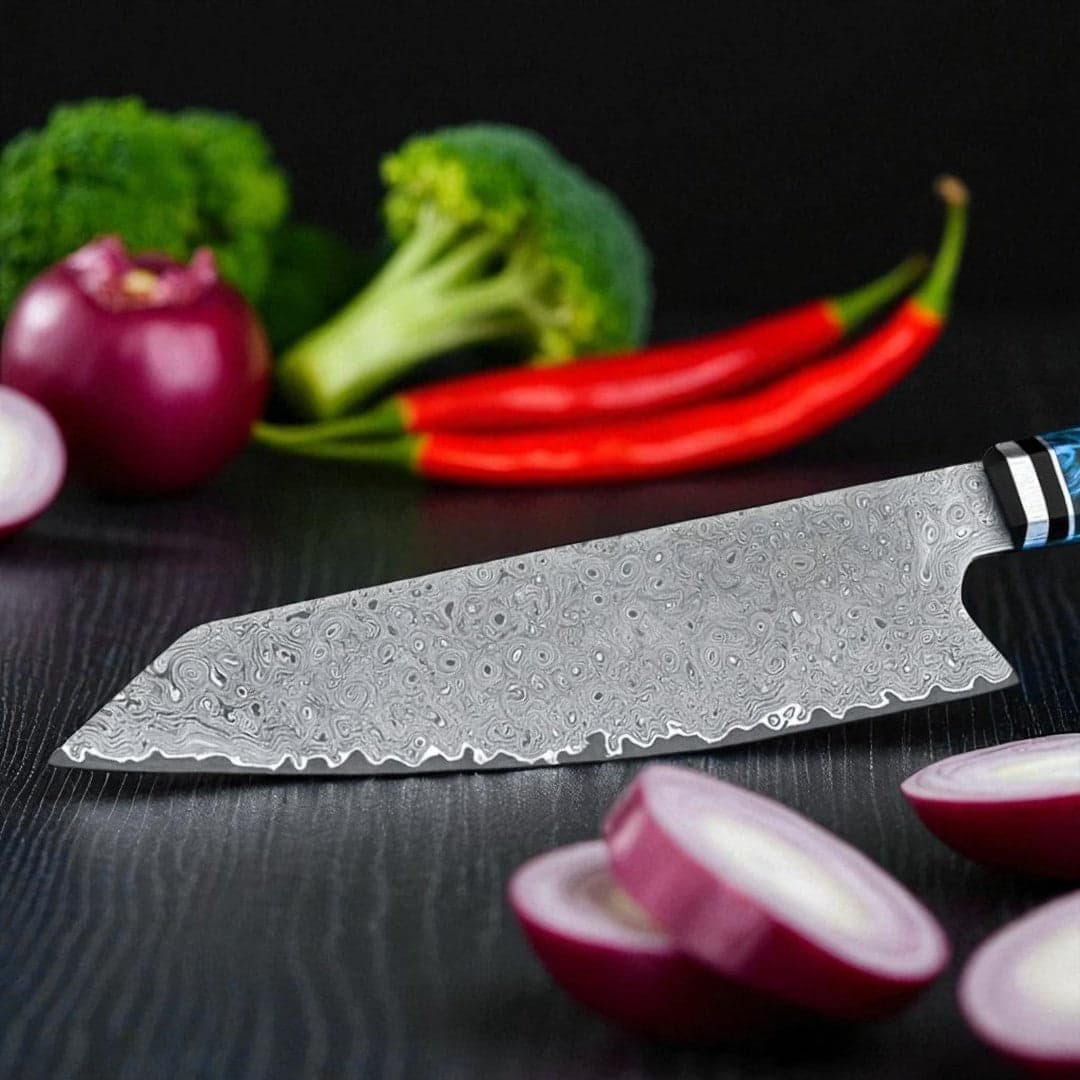
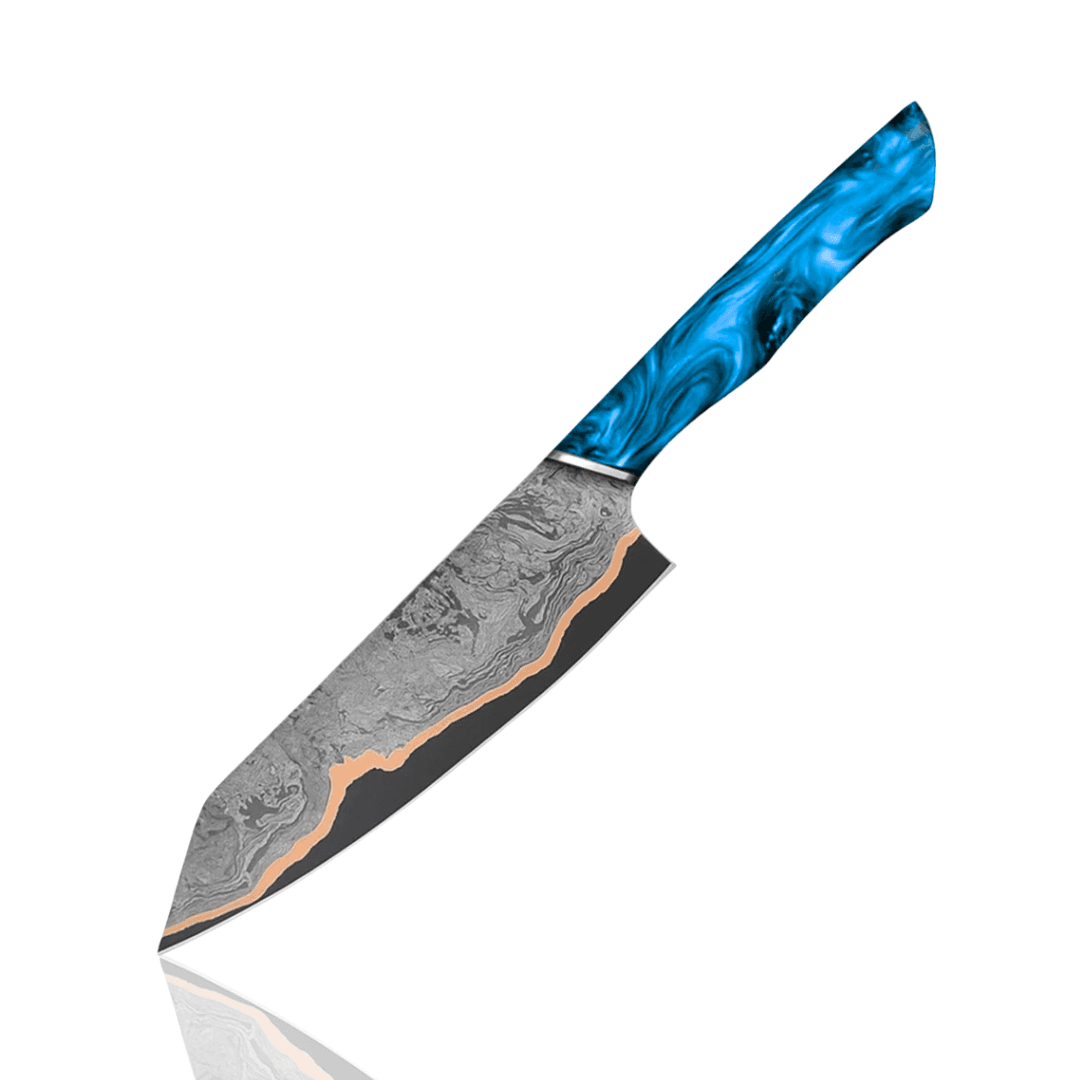
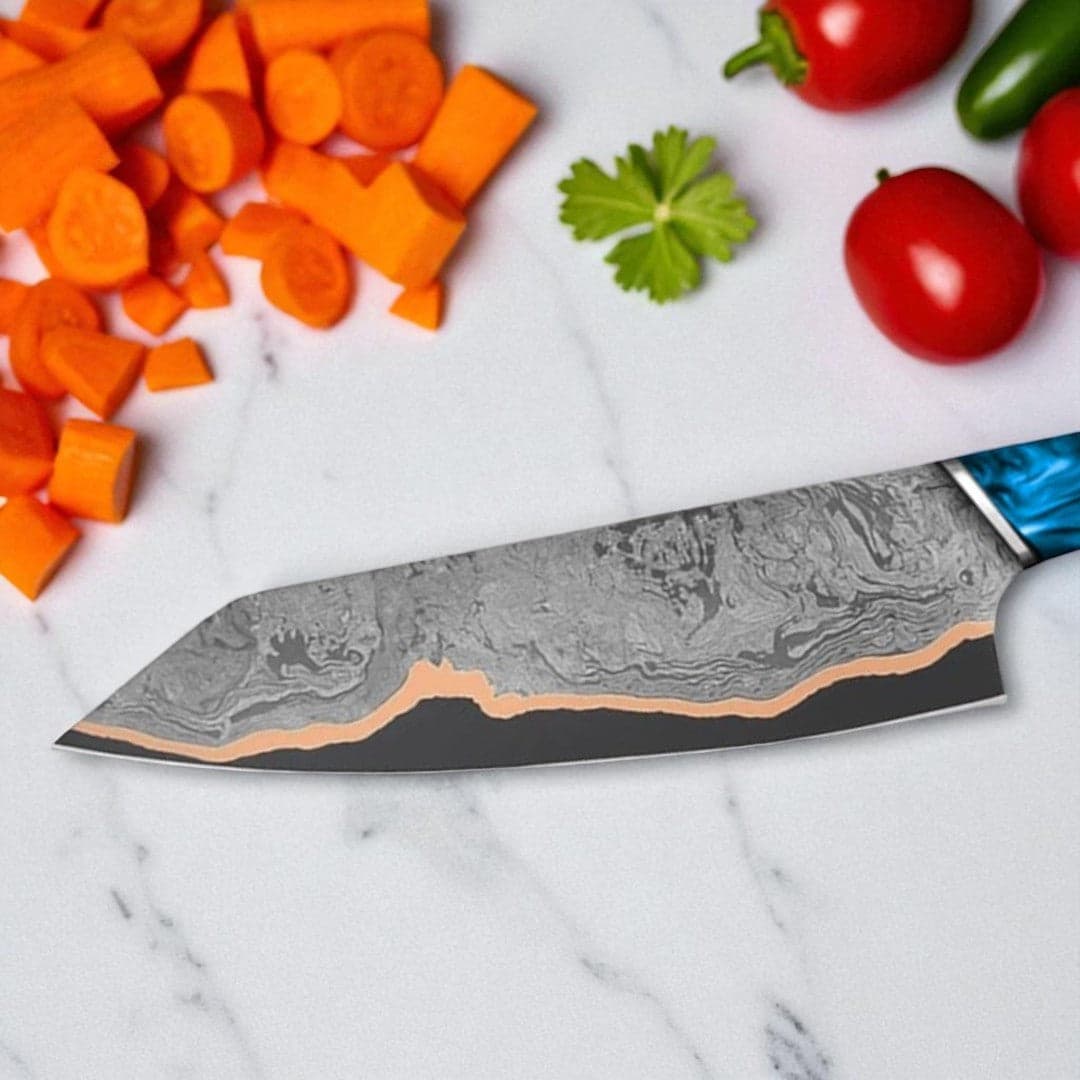
If you prefer a Japanese blade profile, our Kiritsuke Japanese Damascus Steel Chef Knife combines that traditional shape with the same hand-forged Damascus construction, built for precision work like fine slicing and detailed prep.
A Single Knife vs. a Set
A general Damascus chef knife set often bundles several blades of mixed quality. If you'd rather build a full kitchen lineup instead of a single dedicated knife, our Damascus Knife Sets cover that option; this collection focuses on the single chef knife done well.
Is Real Damascus Steel Worth It?
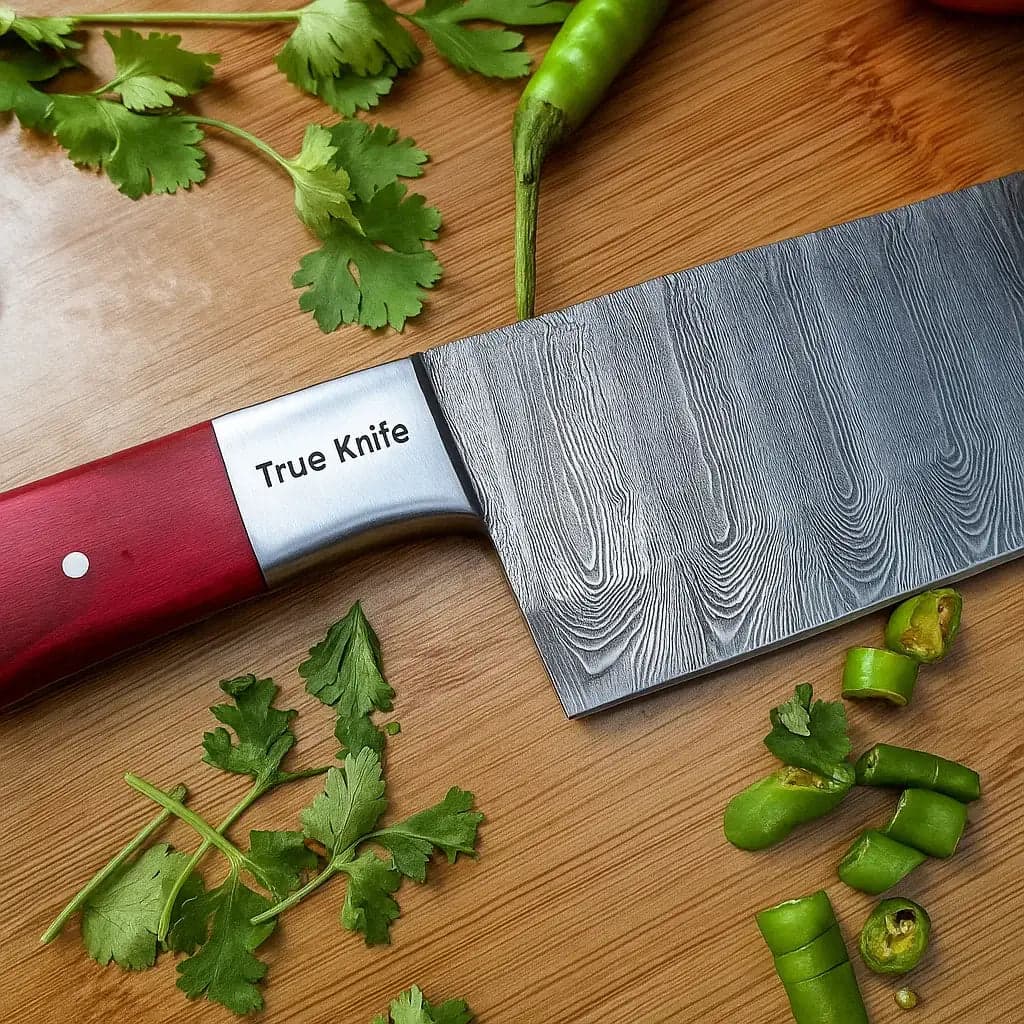
A genuine Damascus blade shows its layered pattern etched all the way through the steel, not just printed on the surface — that's the difference between a real Damascus chef knife and one with a cosmetic pattern only. For a deeper look at what to check before buying your first one, see our guide to choosing a handcrafted Damascus knife. For blade care supplies, our knife accessories have whetstones and oils to keep the edge and pattern in good condition.
FREQUENTLY ASKED QUESTIONS
Is Damascus steel real or just a surface pattern?
Genuine Damascus steel is real, layered steel, not a surface coating. The wavy pattern is created by folding and forging multiple steel sheets together, and it runs through the entire blade, visible from any angle.
Are Damascus chef knives rust-resistant?
Damascus chef knives are not fully rust-resistant. While many include corrosion-resistant layers, the high-carbon steel in the core still requires regular cleaning and drying to prevent rust.
Can I use a Damascus cooking knife for heavy-duty tasks?
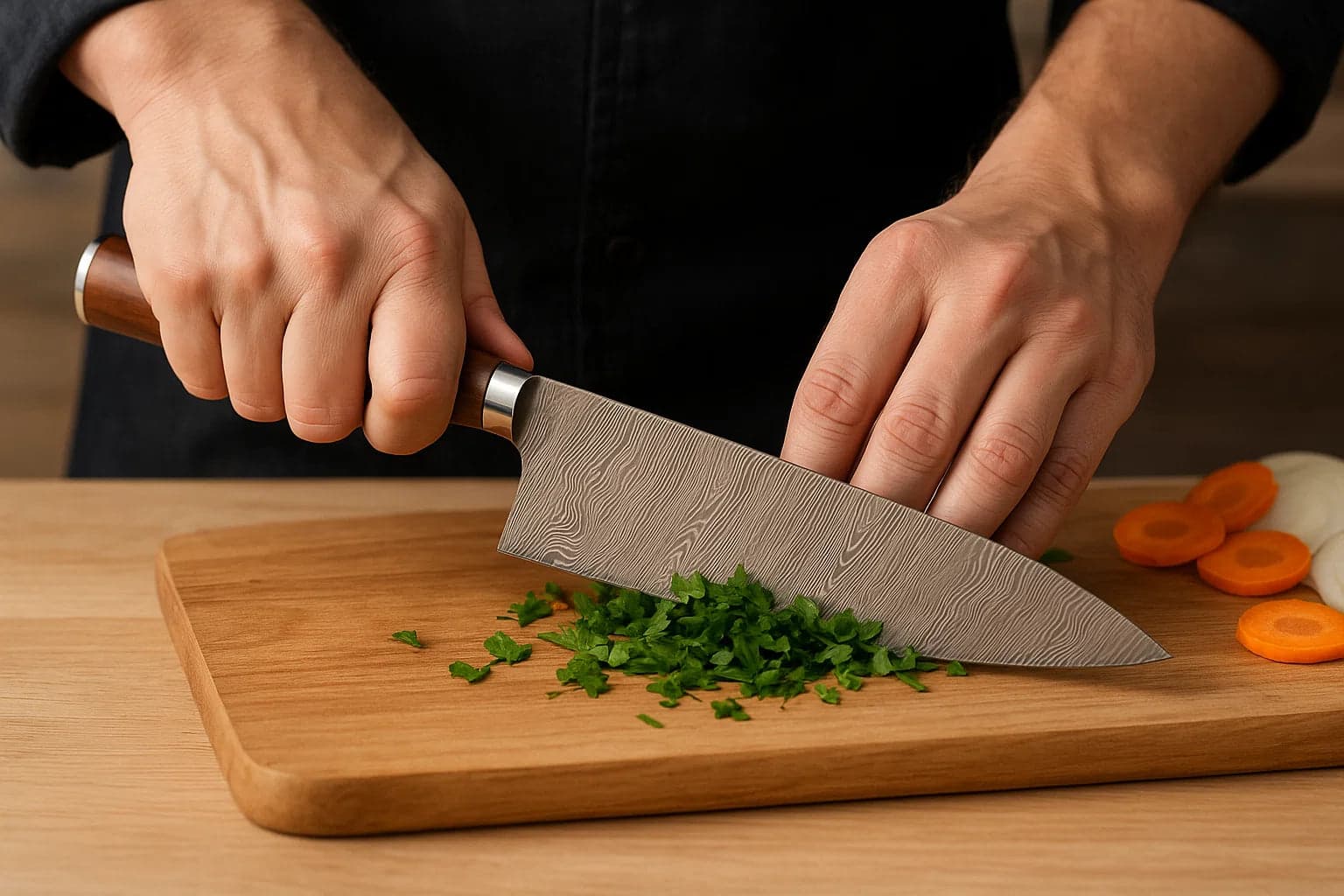
A Damascus cooking knife is best suited to precision cutting, slicing, and dicing rather than heavy-duty tasks like chopping bones or frozen food, which are better handled by a cleaver.
Is Damascus steel good for chef knives?
Yes, Damascus steel is a strong choice for chef knives thanks to its sharpness, edge retention, and distinctive pattern, making it a popular option for both professional and home cooks.
What is the difference between an 8-inch and 10-inch Damascus chef knife?
An 8-inch Damascus chef knife is easier to maneuver and suits most daily kitchen tasks, while a 10-inch blade offers more leverage and control for larger cuts, which experienced cooks often prefer.
What's the difference between a Damascus chef knife and a Japanese Damascus chef knife?
A standard Damascus chef knife follows a Western blade profile, while a Damascus Japanese chef knife, such as a Kiritsuke, uses a thinner, more angular blade shape suited to precision slicing and detailed prep work.